
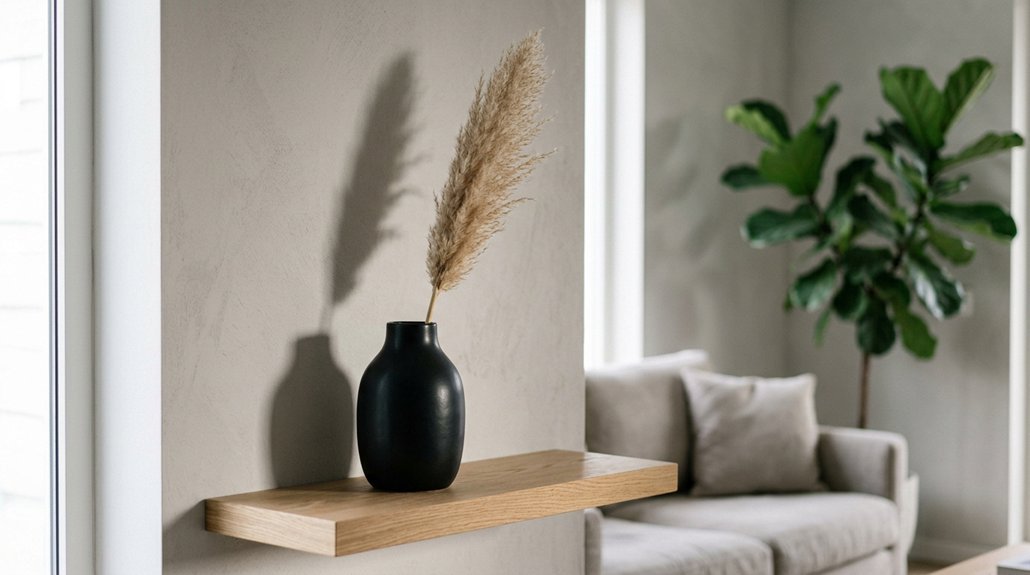


You have probably stared at empty floating shelves more times than you care to admit: that awkward gap between wall and purpose, waiting for something that actually works. The trick is not collecting random objects, but choosing three proven elements that solve the problem.
Start with one bold anchor piece, add living greenery that moves and breathes, then layer in books or sculptural accents with deliberate gaps of three to five inches between items. These choices create visual rhythm, not clutter.
Each element pulls focus without competing, and the spacing lets your eye rest. What you pick matters, but how you arrange it.
Fix Awkward Floating Shelf Height With Purposeful Top-Layer Styling
How do you fix a floating shelf that hangs too high, leaving an awkward gap between it and the ceiling? You’ll tackle this with purposeful top-layer styling that commands vertical space utilization and reclaims that wasted zone.
Place a large focal point, such as an antique or modern clock, at center stage. This anchors your shelf height and prevents the emptiness from reading as a mistake. Add a tall decorative object on one end; it’ll counterbalance the shelf’s height and stop a top-heavy look, while weight distribution across floating shelves creates immediate visual balance.
Build faux diagonals through color and height variation; stagger decorative objects so your eye travels intentionally. Tuck greenery, a trailing arrangement, at one corner to soften edges and draw attention downward. Color and height variation keeps the arrangement lively, cohesive, and complete.
Recommended Products

SILENT NON-TICKING MOVEMENT – Powered by a precise sweep quartz mechanism that runs completely silent. No annoying ticking sounds to disturb your sleep, work, or reading – just peaceful, accurate timekeeping.

Modern Design: Elevate your home decor with the timeless and graceful design of this vintage black table clock, adding an elegant touch to any room.
Balance Visual Weight With Plants, Books, and Sculptures
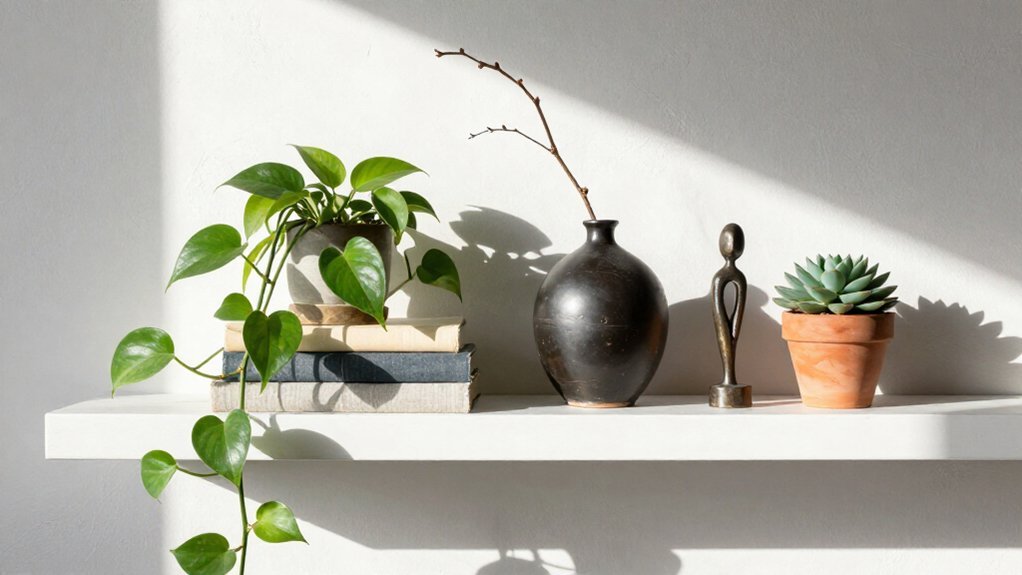
Once you’ve claimed that vertical space up top, you’ll need to lock in balance across the whole shelf. Start with plants: mix tall trailing varieties with shorter succulents to build varied vertical weight and stop your display ideas from falling flat.
Add books next, rotating them face-out or spine-out with larger volumes on one side and slimmer titles on the other. This creates intentional asymmetry that keeps your floating shelves visually alive.
Now layer in sculptures as your focal point, but pair heavier pieces with lighter accents, small framed photos or glass, on the opposite end. You’ll distribute mass without crowding. Leave negative space between object groupings; gaps reinforce purpose and prevent clutter.
You’re building balance through contrast, not symmetry. Trust the tension, it works.
Recommended Products

Lifelike and Vibrant - Instantly elevate your home with these 2-Pack fake pothos vines. Each vine stretches 43.3 inches with lifelike multi-green leaves and natural veining. Unlike real plants, our fake plants feature fade-resistant colors and realistic textures that blend seamlessly into any decor style - from modern apartments to rustic farmhouses. Includes realistic butterflies for an extra touch of charm.

POT INCLUDED – White melamine pot comes with fake plants. It's Medium/Small Artificial Plants for Home Decor Indoor with Pot. (Silk Plants for Home Decor Indoor / Faux Hanging Plants Indoor)

Package Includes: 1 Pack artificial hanging plant with black pot. the trailing foliage vine extending up to 39.37"(100cm), Its compact dimensions enable effortless, versatile placement in any space, This artificial pothos plant looks very lush.
Space Floating Shelf Items With Intentional 3–5 Inch Gaps
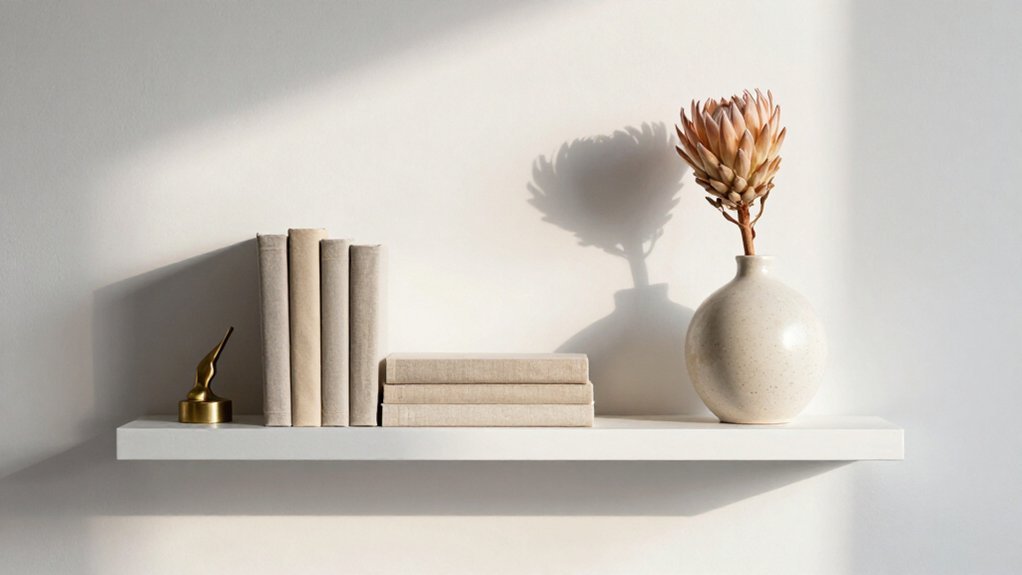
Why do some shelves feel effortless while others feel chaotic? You’ve mastered the answer: intentional spacing. When styling floating shelves, maintain 3–5 inch gaps between grouped items. This creates visual breathing room, letting each piece claim its territory without crowding neighbors.
Start shelf styling by placing a taller item or stack at one end. Counterbalance with shorter objects, emphasizing the gap between them. Use varied textures within each cluster, mixing smooth ceramics with rough wood or woven elements. This makes the spacing feel deliberate, not accidental.
Pair larger focal pieces with smaller accents, keeping that 3–5 inch rhythm. The balance between object and negative space keeps eyes moving calmly across your display.
Schedule quarterly reassessment of your floating shelves. Swap pieces, refresh arrangements, preserve those gaps. Your shelf styling stays intentional, not cluttered.
Recommended Products
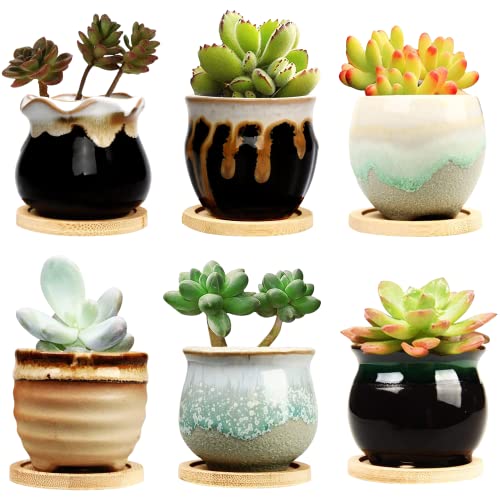
Mini Set:Those pots are in 6 mini design,size are little difference but all around W2.3"x H2.15" inch which is perfect for holding succulent, herbs and cactus plants,small plants and flowers.comes 6 pack in a safty package.Great for display,like birthday,home use,christmas.Please note: This is just a plant pot; it does not include a plant.

【With Drain Holes and Mesh Pad】:Large drain holes are good for draining, and with leak-proof mesh pads, it keeps soil from running away, suitable for orchids, succulents, cacti, other flowers and green plants, perfect for home decoration.

Small Succulent Planter With Drainage Holes and Mesh Pad: Large drain holes are good for draining, and with leak-proof mesh pads, it keeps soil from running away, suitable for orchids, succulents, cacti, other flowers and green plants, perfect for home decoration.