
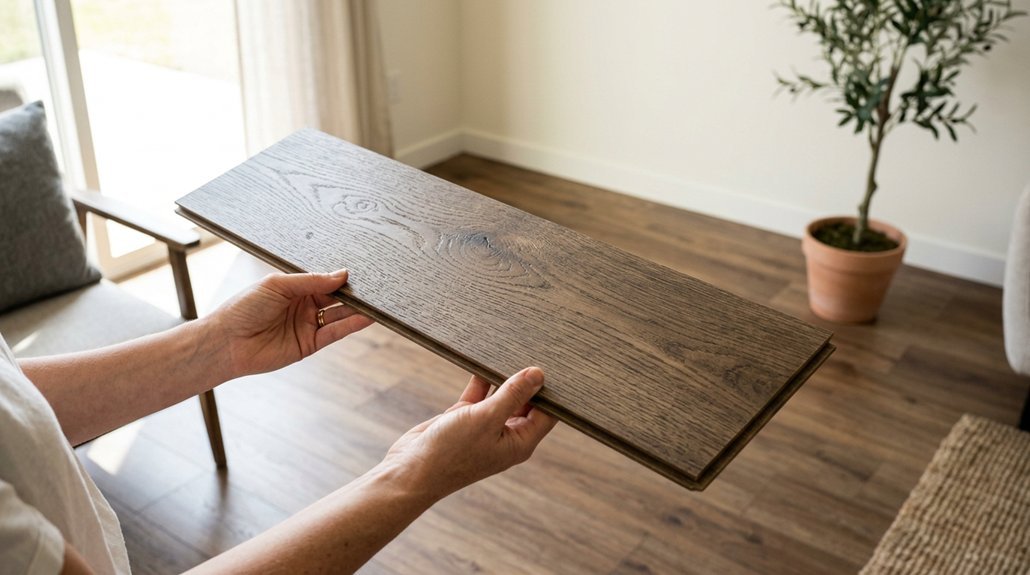


You might assume laminate flooring contains real wood, but it’s actually four fused layers of synthetic material built for endurance. The top wear layer resists scratches and UV fading, while a printed decorative layer gives you the look you want. Beneath that, a high-density fiberboard core provides stability, and a backing layer seals out moisture.
Direct-pressure lamination bonds everything at roughly 300°F. Some variants swap the standard core for waterproof materials, or add foam backing for extra cushion. Your specific room’s traffic and moisture exposure should guide which construction you choose.
What Laminate Flooring Actually Is (and Isn’t)
What exactly are you walking on when you choose laminate? You’re standing on a multi-layer synthetic product built for durability, not natural wood. Manufacturers start with a laminate core of high-density fiberboard, offering stability underfoot. Through direct-pressure lamination, they fuse four layers above 300°F, creating a dense, resilient board.
The decorative layer displays your printed image, whether wood or stone visuals, while a transparent wear layer protects against scratches and fading. A backer layer balances the board from below.
You install this durable surface with a tongue-and-groove locking system, letting it float over your subfloor. You’ll need moisture underlayment beneath for sound control and vapor protection. This construction delivers dent resistance and standing up to heavy traffic without the cost of hardwood.
Recommended Products

ROLL SIZE - 200 sq. ft. MOISTURE PROTECTION - Protect your floors from harmful subfloor moisture with built-in moisture blocking film. No additional films required! STANDARD...
Your Top-to-Bottom Tour Through the Four Layers
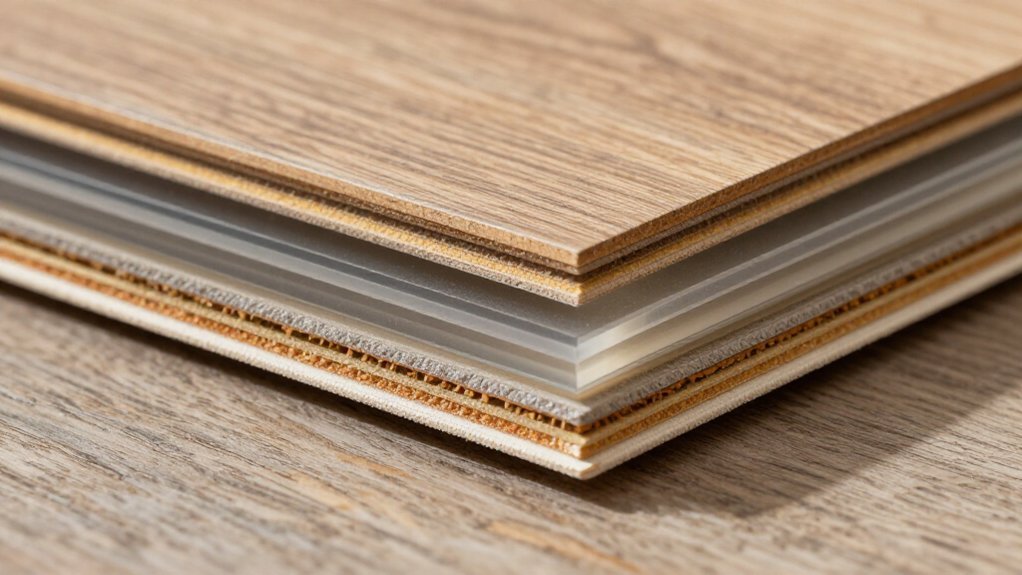
When you understand what you’re actually paying for, you make better buying decisions, so let’s walk through each layer from the surface down.
Layer 1: Wear Layer****
This clear top coat shields your floor from scratches, scuffs, and UV fading. It’s your first line of defense for long-term durability.
Layer 2: Decorative Paper****
This carries the printed wood or stone-look image. It gives laminate its realistic appearance.
Layer 3: Core Board****
Usually HDF, high-density fiberboard, this provides structural stability and moisture resistance. It’s the backbone of your plank.
Layer 4: Backing Layer****
This backer paper balances the plank, seals the back, and prevents moisture-related warping.
Manufacturers press these four layers together using direct-pressure laminate processing. This multi-layer construction creates an affordable, practical flooring option. You’ll get consistent performance when each layer performs its specific job.
Recommended Products

63pc Laminate Wood Flooring InsDouble-Faced Mallet: It is cast iron body with bright chrome plating. Double-sided solid PVC head delivers soft yet powerful impact. The heads are detachable for easy replacement. The soft, non-slip TPR handle offers comfort, and its ergonomic design reduces fatigue during work
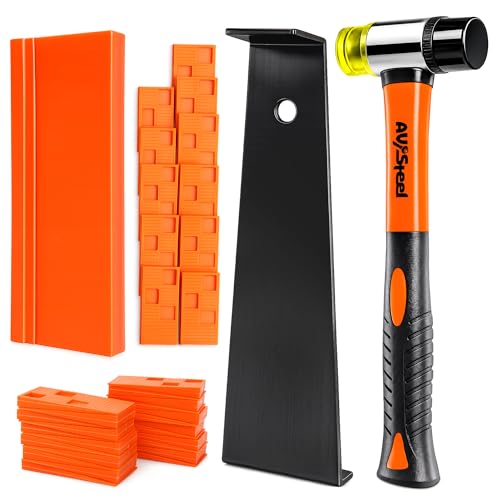
✅ Set Includes: Floor installation kit includes 1 pull bar, 1 tapping block, 40 spacers and 33mm double-faced mallet to help install laminate, vinyl plank, LVP, and hardwood flooring more easily and efficiently.

🏠Thick peel and stick floor tile: Thickness is 0.06inch (1.5mm). Size 12x12 inch included 4 Tiles, made of vinyl. White wood peel and stick floor tile waterproof, renter friendly, groutable, non slip, no special tools needed.
What the Wear and Design Layers Do for Daily Life
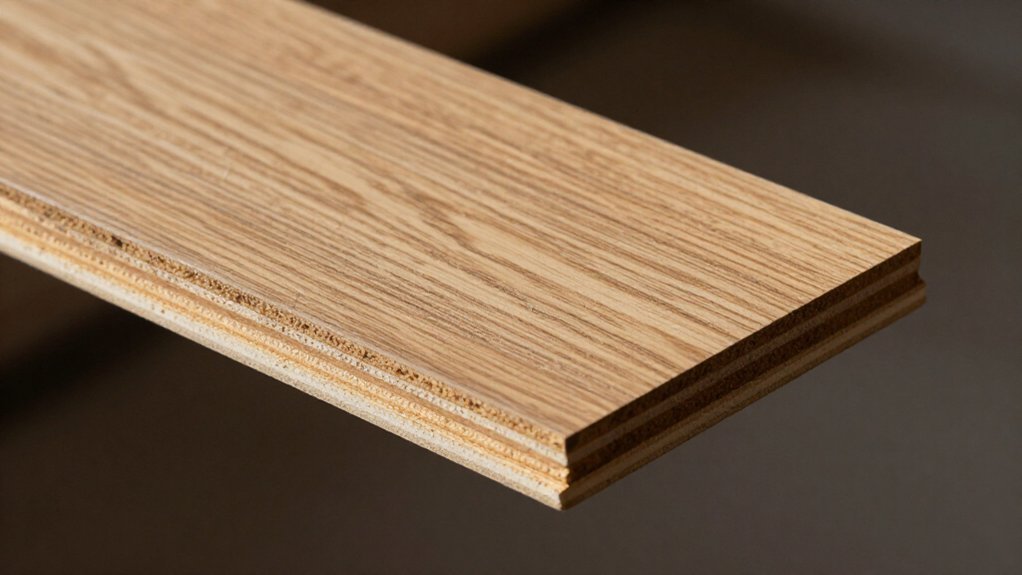
Now that you’ve seen how all four layers stack up, it’s time to focus on the two you’ll actually interact with: the wear layer and the design layer.
The design layer gives your laminate flooring its look. High-quality printed decor mimics wood, stone, or art patterns, while embossing adds texture you can feel underfoot. Without it, you’d be staring at plain composite board.
The wear layer provides surface protection you depend on daily. Melamine resin handles basic traffic, but aluminum oxide delivers superior scratch resistance. This transparent shield defends against scuffs, stains, and UV fading that would otherwise dull your floors within years.
Together, these top layers determine how convincing your floor appears and how gracefully it ages. Choose thicker wear layers for busy households, as they extend your floor’s appearance significantly longer than thin alternatives.
Recommended Products

🏠Thick peel and stick floor tile: Thickness is 0.06inch (1.5mm). Size 12x12 inch included 4 Tiles, made of vinyl. Solid black wood peel and stick floor tile waterproof, renter friendly, groutable, non slip, no special tools needed.
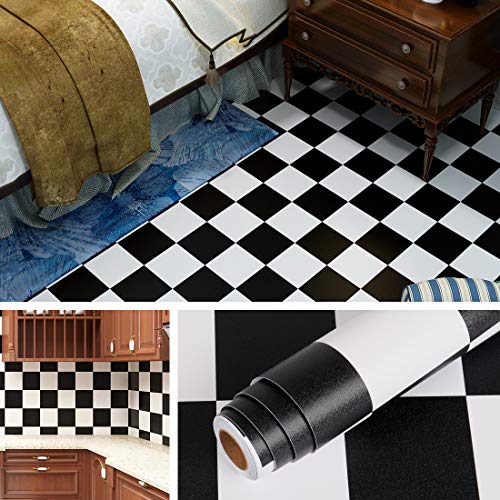
🏠Details: 15.8x78.8 Inch,3.8x3.8 inch per checkered, total 8.65 sq.ft (40cmX2m). Self adhesive. Made of durable vinyl. Checkered black and white contact paper peel and stick waterproof. Oil proof. Fully removable.

🏠 Marble peel and stick floor tile: Stick on floor tile to any flat and dry flooring,no grout or special tools needed. It is groutable if you like. Give your room a brand new look at inexpensive cost.
How the Core and Backing Handle Weight and Moisture
Where does your laminate flooring find its real muscle? You’ll find it in the laminate core, typically built from high-density fiberboard (HDF). This HDF gives you serious weight support, shrugging off dents and daily impacts without complaint.
Your backing layer works as a moisture shield, acting as a balancing layer that keeps planks flat and guards your subfloor. Some options add foam padding here, cutting moisture transfer and softening your step.
Together, these layers deliver warping resistance against humidity and minor spills. Precision edge profiling on the laminate core and backing layer ensures your locking system clicks tight, keeping gaps at bay. Check manufacturer specs for core density, measured in kilograms per cubic meter, before you buy.
Recommended Products
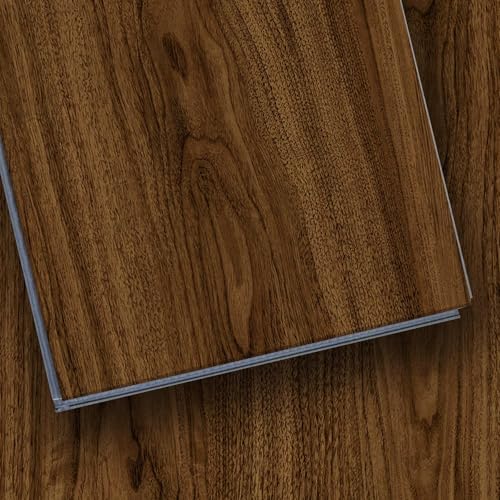
【Ultra-Durable & Pet-Friendly】With a 0.3mm wear layer tested over 15,000 abrasion cycles, this luxury vinyl plank flooring resists scratches, dents, and spills. Ideal for busy homes with pets and kids, it stays beautiful for years even in high-traffic areas.

【Ultra-Durable & Pet-Friendly】With a 0.3mm wear layer tested over 15,000 abrasion cycles, this luxury vinyl plank flooring resists scratches, dents, and spills. Ideal for busy homes with pets and kids, it stays beautiful for years even in high-traffic areas.

Realistic Wood Look: Get the authentic look of real wood with grain texture. These floor planks blend seamlessly into any decor style, adding a touch of timeless elegance to your home.
Why Waterproof Laminate Changes the Core Recipe
Standard laminate handles everyday moisture fine, but you need something tougher for kitchens, bathrooms, or busy entryways. That’s where waterproof laminate changes the core recipe.
Instead of standard fiberboard, you’ll find moisture-resistant HDF at the center. This denser core delivers real swelling resistance when spills hit. Manufacturers also add moisture barriers and water-repellent treatments, so water beads rather than soaks in.
The wear layer and decorative paper stay familiar, but the upgraded core prevents warping under wet conditions. Tighter edge milling and improved locking systems seal gaps where moisture sneaks through planks.
You still must wipe spills promptly. Prolonged standing water damages even waterproof cores eventually.
For rooms with real splash risk, this construction gives you practical protection without switching to vinyl or tile.
Recommended Products

Made in United States


Ideal for Engineered Wood and Laminate Floors
What This Construction Means for Your Specific Rooms
How does a floating floor with four distinct layers actually perform where you live, cook, and clean? Your laminate core, made from HDF, gives you dent resistance and structural strength beneath the decorative paper that delivers realistic visuals. The backing layer shields this core from below, providing moisture resistance and dimensional stability when humidity swings hit kitchens or bathrooms. Meanwhile, your wear layer takes daily abuse, blocking scratches and fading from sunlight streaming through living room windows.
Because you install this as a floating installation over underlayment, you gain flexibility for room-specific suitability without glue or nails.
- Living rooms: Standard AC3 wear layer ratings handle moderate traffic, while thicker underlayment quiets footsteps on your HDF core.
- Kitchens: Enhanced backing layer seals and perimeter caulking address moisture resistance near sinks and appliances.
- Bathrooms: Only select water-resistant laminates belong here, standard cores risk swelling, check manufacturer warranties before deciding.