
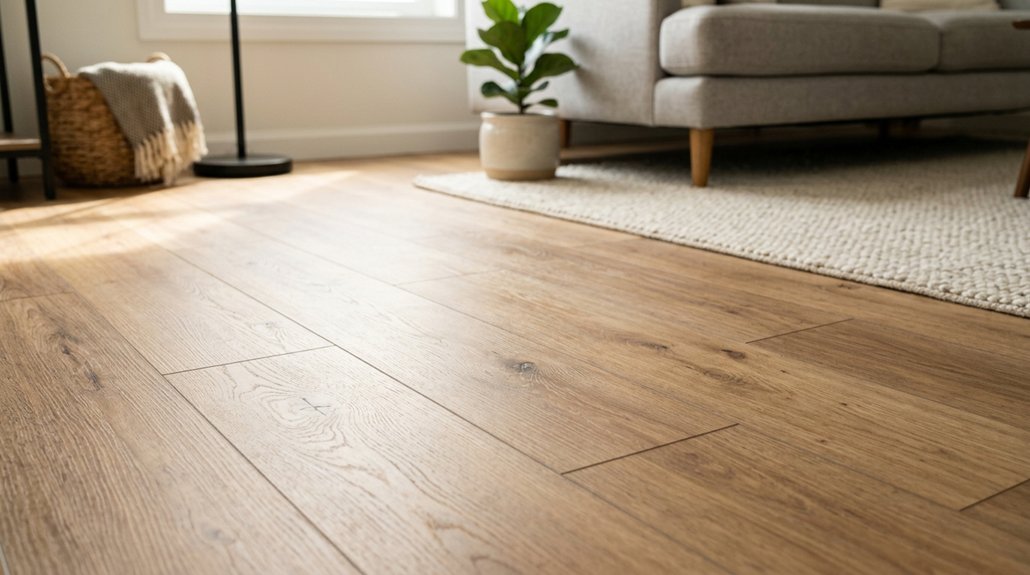


You want floors that look like real wood without the hassle, and modern laminate delivers. High-definition printing creates varied grains, knots, and color shifts across each plank. Embossed-in-register textures match raised patterns to the printed image, so you feel the grain you see.
Non-repetitive designs in oak, maple, and hickory tones, often gray-washed for contemporary spaces, eliminate that fake, repeating look. A clear wear layer protects the visual, while an HDF core adds stability and reduces hollow sounds underfoot.
The real question isn’t whether laminate can look authentic; it’s whether you’ll spot the difference in your own home. Here’s how to tell.
How Realistic Is Laminate Flooring Compared to Hardwood?
How closely can laminate flooring actually mimic real hardwood? You’ll find laminate realism has advanced dramatically, and you can judge for yourself by examining three key elements.
Texture Technology
Embossed in register (EIR) synchronizes raised textures with printed grain patterns. You feel actual knots and wood grain underfoot, not flat plastic.
Visual Depth
Modern planks show authentic variation between boards. You won’t spot repetitive patterns that betray older laminates, and the wear layer protects these detailed surfaces for 15-25 years.
Core Construction
High-density fiberboard (HDF) provides structural stability that prevents the hollow sound you might associate with cheap flooring.
Hardwood Comparison
You gain convincing wood aesthetics at 30-50% lower cost, plus easier maintenance. The trade-off: you sacrifice refinishing options, since laminate cannot be sanded.
Recommended Products

IMPORTANT: Made for 4"x10" Duct Opening. Actual Item Dimensions are 11.5" x 5.5"

Scroll Design steel plated - Brushed Nickel finish floor register
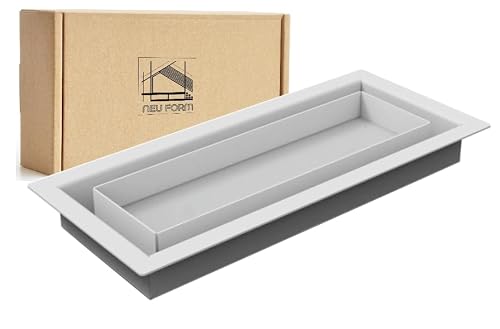
MEASURE FLOOR OPENING for Accurate Fit: This register is designed to fit floor openings that measure between 3 7/8" x 9 7/8" and 4 1/2" x 10 1/2". Please measure the floor opening (not the outer dimensions of your existing grill or register cover) to ensure proper fit.
What High-Definition Printing Does for Laminate Looks
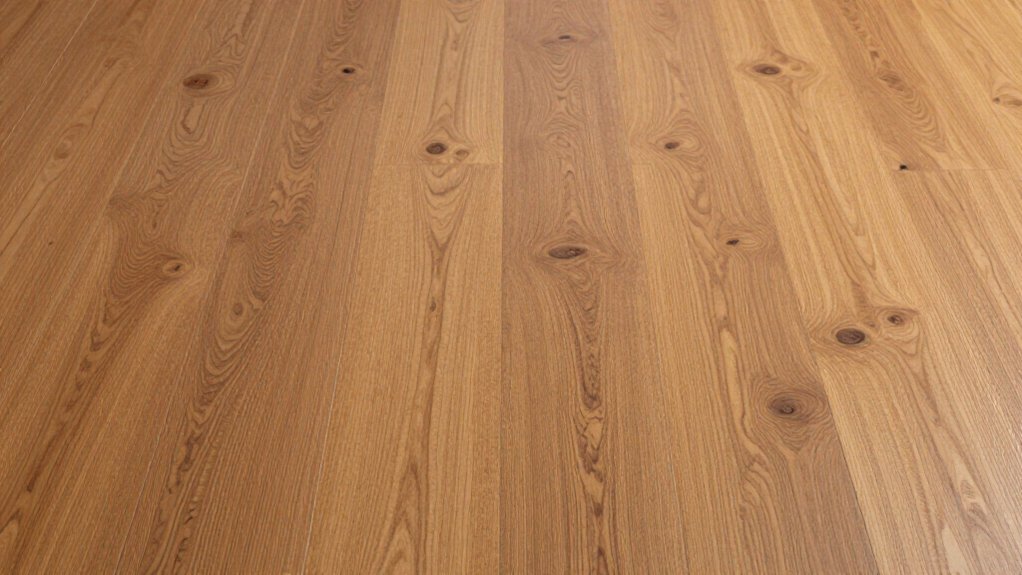
You’ll notice high-definition printing changes laminate into something you’d swear was real wood or stone, with each plank showing unique grain patterns, knots, and color shifts that break up repetition. Advanced digital clarity captures every detail, from intricate veining to subtle tone differences, while varied plank designs ensure your floor looks naturally assembled rather than factory-stamped.
This technology, paired with synchronized embossing that aligns texture to the printed image, gives you tactile depth you can both see and feel underfoot.
Recommended Products

Superior Quality: Made of good quality and flexible PVC material, this floor transition strip is highly durable and abrasion-resistant for its special printing surface.

PERFECT FOR ALL FLOOR TYPES: Finished oak, Cherry, Brich, Hickory, Maple, Ash, Beech, Pine, Mohogany, Tigerwood, Amendoium, Kempas, bamboo, Engineered wood , All Tile surfaces including Ceramic, Glass tile and Stone Surfaces (Marble)

【Non-PVC】:Unlike SPC flooring, dotfloor's innovative hybrid wood flooring uses a novel composite wood base that is free of PVC and harmful gases. It's safe for children and pets to play on, making it suitable for children's rooms, bedrooms, bathrooms, and more.
Ultra-Realistic Wood Imaging
Why settle for a floor that looks fake when today’s laminate can fool your own eyes? High-definition printing delivers ultra-realistic wood imaging that captures every grain pattern, knot, and color variation you’d see in natural hardwood. You get planks with wide visual variety, so repetition becomes nearly invisible.
This technology reproduces subtle imperfections and intricate details that older laminates simply couldn’t achieve. When manufacturers pair these prints with embossing techniques, specifically embossed in register, the texture aligns perfectly with the image beneath. Run your hand across the surface, and you’ll feel knots and grain where you see them.
These laminate textures create realistic wood visuals that satisfy modern design demands without the hardwood price tag. You get authentic aesthetics, practical durability, and cost-effective flooring that performs beautifully in busy households.
Advanced Digital Clarity
High-definition digital printing has changed what you can expect from laminate flooring. HD printing delivers ultra-realistic wood-look laminate visuals with intricate knots, veining, and grain details you’d swear were genuine hardwood. Advanced systems create non-repetitive patterns across planks, mimicking nature’s random diversity instead of obvious repetition.
Modern manufacturing pairs these prints with Embossed in Register (EIR) technology. This process aligns raised surface textures precisely with printed grain patterns, delivering textured realism you can both see and feel underfoot. The synchronization matters: when printed knots match physical indentations, the illusion becomes convincing.
This printing advancement expands your options dramatically. You gain access to wider color ranges, varied grain patterns, and multiple wood grades previously unavailable in laminate. The result reads authentic from across the room and holds up to close inspection.
Varied Plank Designs
How differently does your floor look when every plank tells its own story? With varied plank designs, you get exactly that. HD prints capture unique grains, knots, and color shifts across every board, so you won’t spot tedious repeats.
What HD Printing Delivers
- Visual variety: Each plank carries distinct markings, mimicking natural hardwood or stone without artificial uniformity.
- Subtle imperfections: Advanced printing records intricate veining and authentic flaws older laminates ignored.
- Texture alignment: Embossing (EIR) matches physical textures to printed details, pressing grain patterns and knot depressions exactly where images show them.
This pairing of HD prints with embossing (EIR) heightens realism significantly. You perceive genuine depth because light plays across synchronized textures and visuals. Your floor reads as authentic material, not manufactured sameness.
Choose products specifying wide plank variation for maximum natural effect.
Why Plank Variation Makes Laminate Look More Authentic
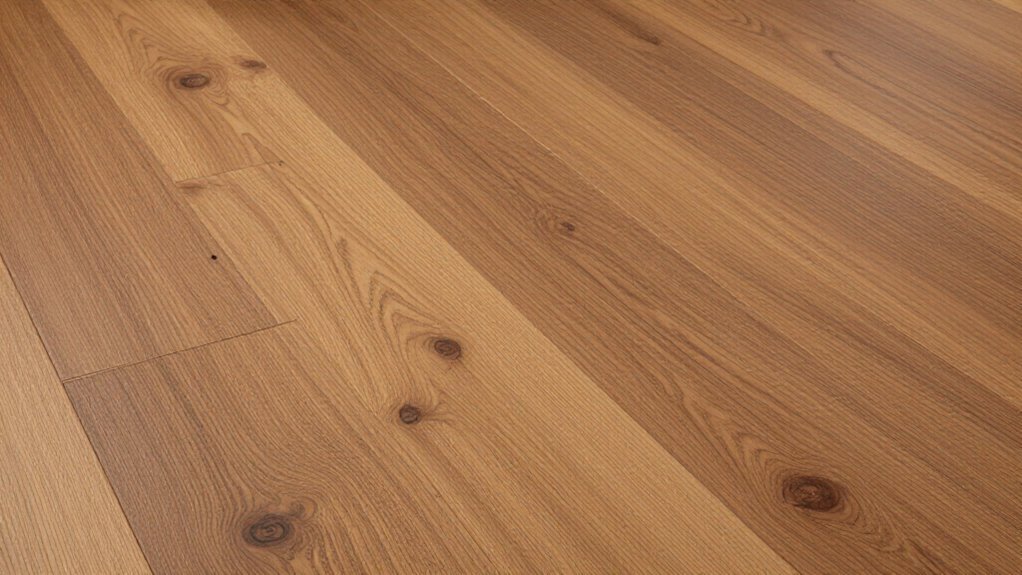
You’ll notice authentic hardwood floors never repeat the same board twice, and that’s exactly why plank variation matters in laminate. High-definition digital printing gives each plank its own grain pattern, knot placement, and shade shift, while Embossed in Register (EIR) texture aligns raised surface details with those printed images for consistent realism.
When you combine these visual diversity techniques with precise texture alignment across multiple plank lengths and widths, you get a floor that mirrors natural hardwood’s unpredictable character rather than looking like stamped copies.
Recommended Products

REALISTIC WOOD LOOK: Featuring luxury wood-grain texture, micro-bevel edges, and HD film prints, these luxury vinyl planks perfectly replicate real hardwood floors with a fraction of cost of wood flooring.


12 Colors Wood Repair Kit: Includes 12 Colors wood filler sticks (Maple、Gray、Ivory、Red Oak、Black、Walnut、Oak、Cherry、Rosewood、Natural、Mahogany、White) equipped with a scraper designed to match most wooden furniture, floors, cabinets, tables, doors and laminate surfaces, providing a seamless color match for daily repairs.
Visual Diversity Matters
When you’re scanning laminate samples side by side, you’ll notice something right away: the best ones don’t repeat themselves. That’s plank variation working for you.
Modern laminate visuals use high-definition digital printing to deliver ultra-realistic grain patterns, knots, and color shifts across every board. You’ll see subtle imperfections and intricate veining, each captured with crisp clarity. This isn’t repetitive wallpaper; it’s engineered diversity.
The 3D realism gets a serious boost from embossed in register technology, which aligns raised surface texture with the printed image beneath. You can actually feel the grain you’re seeing.
That multi-layer construction, design layer fused to wear layer and core, builds authentic depth. Together, these elements create a floor that looks genuinely harvested, not factory-cloned. You get hardwood authenticity without the hardwood headaches.
Texture Alignment Techniques
Texture alignment separates convincing laminate from obvious imitation. You can spot quality laminate floorboards by checking how surface texture matches the printed image beneath.
How EIR Technology Works
Embossed in Register (EIR) presses raised grain, knots, and cracks into the surface exactly where they appear in the print design. You feel a knot when you see it, creating synchronized visual and tactile realism. This texture alignment gives flat flooring dimensional hardwood mimicry.
Why Variation Matters
High-definition digital printing produces ultra-realistic planks with wide variation in grain, color, and knots. You won’t see obvious repeats across your floor. Each plank carries unique veining and imperfections, just like real wood.
Shopping Checklist
- Run your hand across planks to verify texture matches image
- Inspect 8-10 planks for visual variety
- Confirm EIR labeling on product specs
This combination delivers authentic depth without the hardwood price.
How Embossed-in-Register Texture Creates Real Wood Feel
How exactly does laminate flooring fool your fingertips into thinking it’s real wood? You feel it through Embossed-in-Register (EIR), a manufacturing technique that raises surface texture to match printed wood grain exactly.
When you run your hand across laminate with EIR, your fingers detect tactile knots, grain ridges, and veining that align perfectly with what your eyes see. This synchronization creates real wood feel that flat prints cannot replicate. The texture responds to light and viewing angles, amplifying depth and dimensionality.
Manufacturers pair EIR with a protective wear layer, ensuring your floor maintains both visual alignment and tactile authenticity over years of use. You distinguish quality laminate from cheap photographic copies by this consistent, planked surface texture that mirrors natural wood’s irregularities.
Recommended Products


360 sq. ft. Coverage – Provides generous coverage for full rooms or multiple smaller flooring projects.
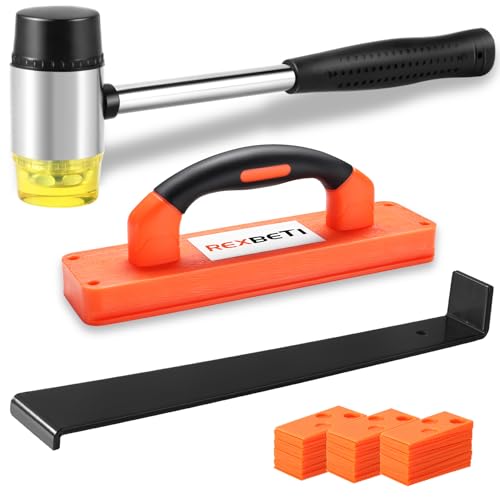
double-faced mallet with non-slip rubber grip help absorb vibration. Constructed of cast iron with bright chrome plating, the hammer is equipped with the hardness of 90±5 HAS. Double-faced solid rubber head delivers a softened, positive strike. The mallet head is 1-3/8 inch in diameter. The length of whole mallet is 10.3inch
Why Clear Wear Layers Keep Laminate Looking Real
Why does your laminate still look like real wood after years of foot traffic? You can thank the clear wear layer sitting right on top.
This transparent shield protects your photographic image from scratches, stains, and fading. You get durability without sacrificing realism, since light passes straight through to the design below.
What the wear layer does for you:
- Guards against daily wear so your floor keeps its fresh, authentic look
- Comes in varying thicknesses, measured in mils, for stronger protection in busy rooms
- Pairs with embossed-in-register (EIR) texture, raised patterns that match the image, to boost tactile realism
Thicker wear layers, common in higher AC ratings, deliver longer-lasting performance. Some modern versions even repel water or resist fingerprints. You keep visual clarity, and your floor keeps looking real.
Recommended Products

Floor Register 4x10: Our floor vent covers are constructed from high-quality steel, ideal for air conditioning, heating, and various systems. The floor register brown dual surface is coated with a rust-resistant pre-coat, ensuring your floor grille's longevity and pristine appearance in any environment

Heavy duty construction allows for walking on floor vent
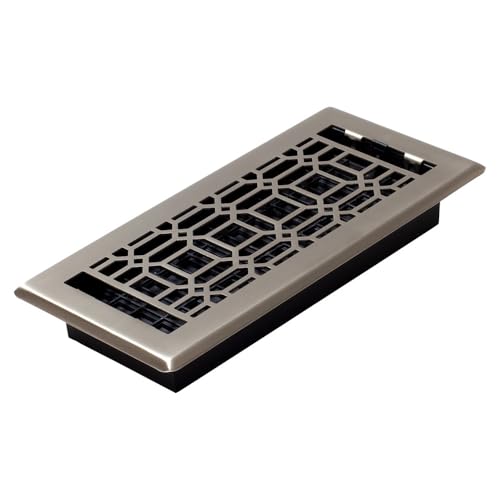
FITMENT: Fits nominal 4" x 10" floor vent opening; faceplate covers surrounding floor
Which Wood Species Looks Most Realistic in Laminate?
The wood species you pick matters more than you’d think, since each grain pattern carries its own visual weight and believability. Oak dominates wood species realism, its prominent grain forgiving against subtle printing imperfections. Maple follows closely, though its tighter grain demands precision from high-definition printing to avoid artificial uniformity.
Hickory earns top marks for laminate flooring realism; its dramatic color streaks and authentic grain patterns mask joint lines between planks effectively. Embossed in register technology improves these species further, pressing texture directly over printed knots and cracks so your fingertips confirm what your eyes see.
Gray-toned visuals, often derived from weathered oak interpretations, resist showing wear while maintaining contemporary appeal. Prioritize planks with 8+ unique faces per carton, ensuring repetition stays invisible across your installation.
Recommended Products

𝐍𝐎𝐓𝐄: Since the length of the peel and stick floor tile wood look is 36Inch (91.44cm), we ship them on a roll to avoid damages. But this bending during shipping will not affect the installation, or you can kindly place heavy objects on the wood vinyl plank flooring for two hours before installation.

Timeless Elegance: Parquet flooring adds a touch of sophistication and warmth to any room with its intricate patterns and rich wood tones.

【Non-PVC】:Unlike SPC flooring, dotfloor's innovative hybrid wood flooring uses a novel composite wood base that is free of PVC and harmful gases. It's safe for children and pets to play on, making it suitable for children's rooms, bedrooms, bathrooms, and more.
How to Evaluate Laminate Realism in Showrooms
Once you’ve narrowed your wood species preferences, you’ll need to see laminate up close before committing. Here’s how to judge realism effectively:
- Inspect HD printing quality. Examine several planks side by side. Authentic products show varied wood grains, knots, and color shifts without obvious repetition.
- Feel for Embossed in Register texture. Run your hand across the surface. Proper EIR aligns raised areas with printed knots and grain lines, creating genuine tactile depth.
- Check wear layer and core material specs. Ask about HDF cores with melamine backing. These components ensure your floor withstands foot traffic while preserving realistic visuals.
- Test water resistance on display samples. Pour water on waterproof versus water-resistant options. Observe how each maintains authentic appearance after spills.
Recommended Products
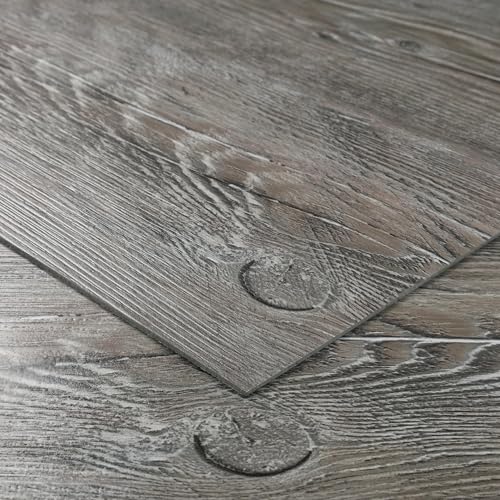
🏠 Wood flooring tiles: Thickness is 0.06inch (1.5mm). Size 12x12 inch included 32 Tiles, made of vinyl. Peel and stick floor tile wood look, waterproof, removable, groutable, non slip, no special tools needed.

🏠 Peel and stick wood flooring planks: Thickness is 0.06inch (1.5mm). Size 6 X 36 inch included 18-Planks, made of vinyl, Dark wood peel and stick floor tile waterproof, groutable, non slip, no special tools needed.

🏠 Wood peel and stick floor tile: Thickness is 0.06inch (1.5mm). Size 6 X 36 inch included 18-Planks, made of vinyl, Reclaimed wood flooring peel and stick floor tile waterproof, groutable, non slip, no special tools needed.