
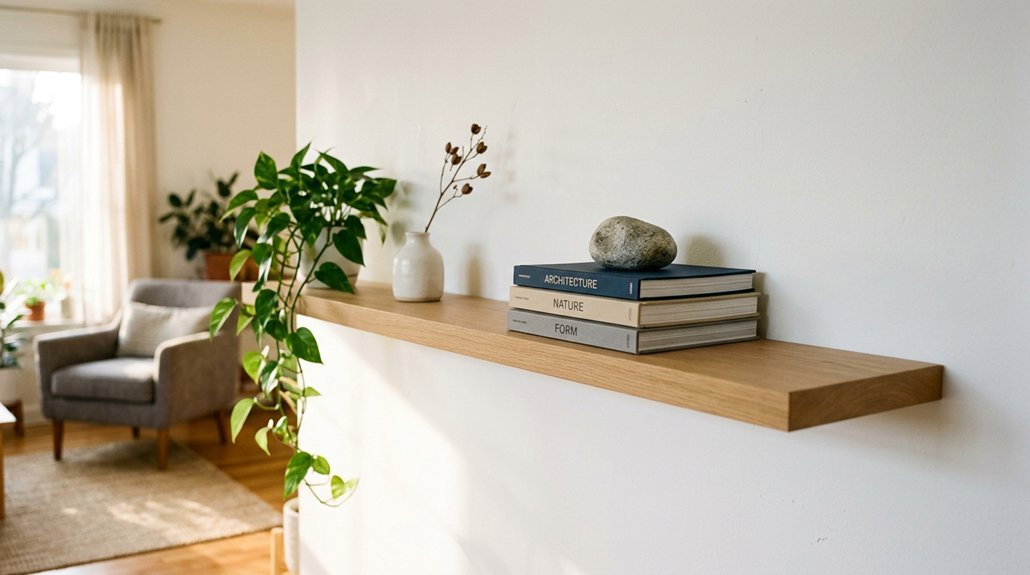


Floating shelves are the iceberg of home storage: what you see is only half the story. You get that clean, weightless look because the real work hides inside the wall. Metal brackets or channels anchor into studs, then the shelf sleeve slides over and locks down tight.
You will choose hardwood or steel when you need strength, or lighter MDF when you are hanging something small. You must hit studs, use proper anchors, and test your load before you trust them with anything precious. The real question is not whether they work; it is whether your wall can handle what you are planning.
How Do Floating Shelves Actually Stay Up?
Ever wondered how floating shelves seem to defy gravity? You slide your shelf onto a hidden bracket, and suddenly all hardware disappears from view. Here’s how you’ll make it work.
The bracket mounts directly into wall studs, your primary load-bearing support. You route a channel into the back of your shelf, then slip it over the wall-mounted bracket. Concealed hardware locks everything together, clean edges flush to your wall.
Skip drywall-only mounting with plastic anchors, those fail and drop your belongings. Stud mounting gives you hundreds of pounds of security.
For reference, a Hovr-compatible system with solid material and proper concealed brackets delivers about 150 pounds per stud. You’ll want to locate studs with a stud finder, mark your spots, drill pilot holes, and attach your bracket before sliding the shelf home.
Recommended Products

The bracket has a 1" backplate and is designed for use with boards 1.5" thick or more.NOTE: The board thickness we refer to is the actual (not nominal) size.

Contents: Package includes (4) 5 inch brackets, (4) 3-1/2 inch wood anchors, (4) 2 inch threaded studs, (4) washers, (4) drywall anchors, (2) wood screws, (1) drill guide, (1) 1/2" drill bit, (1) hex nut, (1) hex bolt, (1) set of instructions

【Dimensions】16inch bracket with 6inch rods, designed to support 6.25 inches to10 inches deep shelf. Lumber thickness1.2-4 inches, length is from 16 inch to 21 inch . (lumber board is NOT included)
How Much Weight Can Floating Shelves Hold?
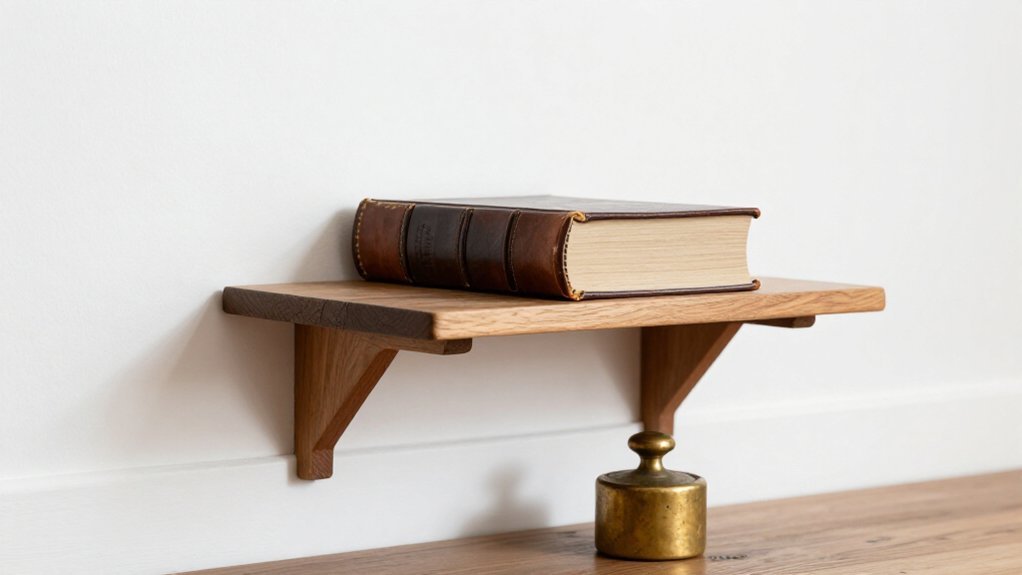
Weight capacity depends on two things: what your shelf is made of, and how you attach it to the wall. Hollow-core MDF shelves sag under lighter loads than solid hardwood.
A standard 12 mm bracket (about the thickness of a smartphone) holds roughly 20 kg on a 22 mm shelf. You’ll want to mount directly into wall studs, not just drywall. Consider stronger systems like Hovr if you’re storing 150 lbs or more per stud.
Recommended Products

Exceptional Strength & Durability: Crafted from high-grade carbon steel, our 4-inch heavy duty floating shelf brackets support up to 125 lbs, ensuring secure display of...
Weight Capacity Factors
How much can you actually load onto a floating shelf before it gives way? Your hidden bracket system, anchored into studs, determines your weight capacity far more than the shelf itself. Traditional L-brackets max out at 25–30 lbs, but concealed-bracket systems like Hovr reach 150 lbs per stud when properly mounted.
Your sag resistance depends heavily on material choice. Hollow-core MDF shelves bow under modest loads, while solid hardwood maintains its shape and appearance over years of use. Shelf dimensions matter too: depths of 6–12 inches and thicknesses around 1.8 inches provide measurable strength differences, with thicker, solid materials offering superior support.
Never mount into drywall alone. Plastic anchors fail unpredictably under stress. Secure your bracket directly into studs, or use proper heavy-duty anchors rated for your intended load.
Installation Methods Matter
Where you put that bracket matters just as much as what you put on the shelf. You must mount into wall-studs, not drywall, because plastic anchors fail and shelves crash.
Bracket Choice Dictates Weight Capacity****
Standard L-brackets max out near 25–30 lbs. A concealed-bracket system, like Hovr, hits roughly 150 lbs per stud. You slide the hidden bracket inside your shelf onto the wall piece, locking them for that clean front.
Shelf Material Controls Sag Resistance
Hollow-core MDF flexes and sags over time. Solid hardwood resists bending, keeping its looks longer.
Pro Tips for Heavier Loads
Match bracket size to shelf thickness: thicker shelves plus larger brackets distribute weight better.
Always locate studs with a finder before you drill.
Test your setup before loading precious items.
Wood or Metal: Which Floating Shelf Material Lasts?
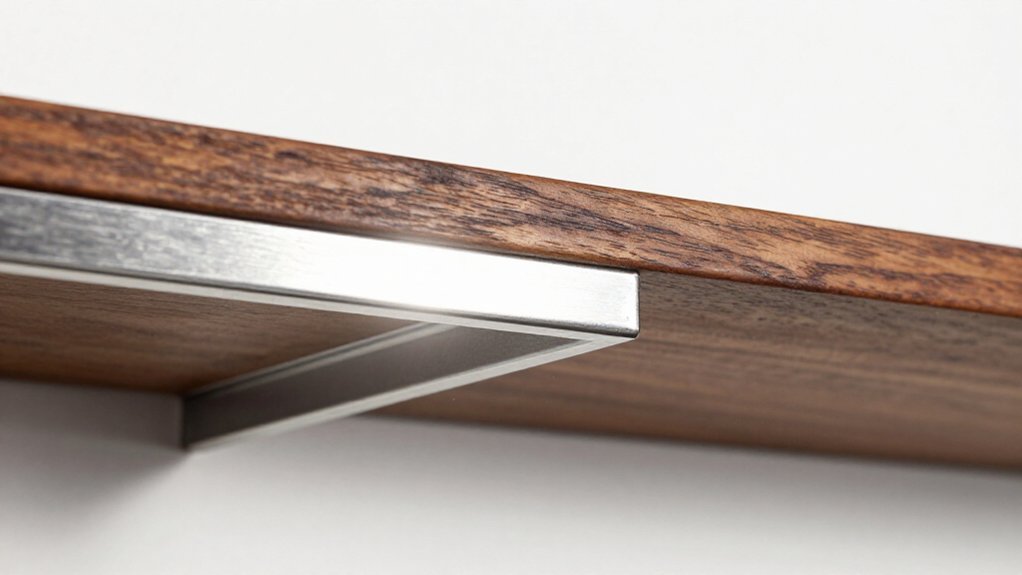
Why do some floating shelves bow after a year while others stay flat for a decade? The answer sits in what you cannot see: the core material.
Solid Hardwood vs. Hollow-Core****
Solid hardwood shelves use real wood through and through. They resist sagging, grip concealed brackets tightly, and handle weight-bearing loads without complaint. You will pay more upfront, but you gain decades of flat, stable storage.
Hollow-core shelves from big-box stores cost less, yet they chip at the edge walnut veneer, swell with moisture, and weaken over time. Their lightweight construction cannot anchor concealed brackets securely, limiting your load capacity.
The Verdict
For heavy or long-term loads, choose solid hardwood. Thicker shelves, sometimes glued to a cleat, add extra support. You spend once, you install once, and you forget about replacement.
Recommended Products

Heavy duty design - Our shelves will hold as much as 120 lbs when mounted to a stud or brickwall because our brackets are made of solid steel and welded components and includes quality screws and anchors.Designed to support 6.5 inches to 8 inches deep shelf.

【Create Modern Floating Shelves Your Way】Stop settling for fixed-size shelves. Build custom floating shelves that perfectly match your space, style and budget using the wood you choose. Whether creating modern, minimalist or Scandinavian interiors, enjoy complete design freedom at a lower cost than custom shelving. The compact hidden design also makes it ideal for floating box shelves, floating cubes, floating nightstands and creative DIY furniture.

【ZERO-ROUTER INSTALLATION: FLUSH MOUNT DESIGN】Stop worrying about buying expensive tools. Unlike traditional brackets that require you to use a router or chisel to hide the backplate, our innovative design features precision countersunk screw holes. This allows the screw heads to sit completely flush within the bracket. You only need a simple power drill to install—no carving, no complex routing, and no gaps between your shelf and the wall.
Can You Get Floating Shelves Cut to Exact Lengths?
You can get floating shelves cut to exact lengths, and you’ll want to know your options before you order. Standard steel shelves come in 36, 48, and 60 inch lengths (or 43 1/4 inches for alcove fits), while wood shelves let you order by the inch with 1/8 inch refinements for a precise fit.
Measure your space carefully, choose your material, and expect made-to-order shelves to ship in 5-7 days.
Recommended Products

【Easy 10-Min Install + Complete Hardware Included】Upgrade your walls in minutes. These floating shelves come with a full installation kit (metal brackets, anchors, screws, level & guide), making setup simple even for beginners. Designed for drywall, wood studs, and concrete walls—no extra trips to the hardware store.

【Varied Floating Shelves】- Let's use our creativity and imagination! The uniquely designed matte surface metal triangular bracket can be installed on the top or bottom of the shelf. Natural wood color with white is suitable for a variety of minimalist and scandinavian home styles.

RUSTIC DESIGN: Set of 6 corner floating shelves featuring a rustic brown waterproof wood finish that adds warmth and character to any room decor
Custom Length Availability
How precisely can you match a shelf to your space? You can order Solid Wood floating shelves in Custom Length increments down to 1/8 inch, including a 43¼-inch option built for alcoves. Standard sizes run 36, 48, or 60 inches, but you’re not locked into those.
Your Material Options:
- Walnut and other hardwoods: Ordered by the inch, with deeper shelves over 10 inches built from glued-up slabs for strength
- Steel shelves: Span 6 to 84 inches
What to Know:
Most configurations ship in 5–7 days. These made-to-order pieces are non-returnable, so request swatch samples before you commit to a finish.
Every shelf includes Concealed Hardware, mounting into studs (drywall anchors as backup), and supports substantial weight. Need something beyond the catalog? Shelf Nerds handles bespoke builds.
Ordering Process Steps
What steps do you take when you’re ready to order a shelf built to your exact dimensions? First, you select your coordinates: length, depth, and thickness. Standard steel lengths run 36, 48, 60, or 43¼ inches for alcoves, while wood shelves let you order by the inch with 1/8 inch refinements. Depths span 6 to 12 inches for steel, and wood thicknesses come in 1.25″, 1.5″, or 1.75″ to fit hidden brackets.
Next, you handle customization details. You pick your finish, and you order swatch samples first, because made-to-order shelves are non-returnable. For builds beyond the catalog, you contact Shelf Nerds directly.
Finally, you review lead time. Standard configurations ship in 5 to 7 days, but custom cuts take longer. You confirm your timeline, then you place your order.
Precision Measurement Options
Whether you’re filling a narrow alcove or spanning a full wall, you’ll get shelves cut to your exact length. Wood shelves come by the inch, with 1/8 inch refinements available, while steel runs 6 to 84 inches. Standard options include 36, 48, 60, or 43¼ alcove sizes.
Order wood by the inch, with 1/8 inch precision for perfect fits. Choose steel from 6 to 84 inches in length. Select deeper wood over 10 inches, built from glued-up slabs for strength. Request custom work beyond catalog through Shelf Nerds.
Thickness stays fixed at 1.8 inches to hide the back channel for concealed brackets. Made-to-order shelves ship in 5-7 business days. They’re non-returnable, so order swatch samples first to confirm your finish.
Where to Put Floating Shelves in Every Room
Where exactly should you mount floating shelves so they actually earn their keep? Let’s break down wall placement room by room, turning every wall into smart storage display.
Strategic floating shelf placement transforms bare walls into purposeful storage and display, room by room.
Living Room: Run floating shelves above your couch. You’ll keep art at eye level, free up floor space, and build a cohesive decor display.
Laundry Room: Mount shelves above your machines. You’ll keep detergents within reach, and you’ll maintain a cleaner, open area.
Bedroom: Install a compact shelf 16 inches above your mattress. You’ll reach it easily from bed, or you’ll use it as a nightstand alternative.
Kitchen and Bathroom: Choose solid hardwood or steel floating shelves with moisture-resistant finishes. You’ll store everyday items while preserving open, breathable spaces.
Corners and Alcoves: Pick corner or triangle floating shelves. You’ll maximize storage in tight wall areas without protruding into the room.
Recommended Products

Measuring 10 x 2 inches, these brackets perfectly work with a traditional 10 to 12-inch deep shelves board (Orders do not include boards)

✓ HIGH-QUALITY METAL MATERIALS: Our shelf support is made of thick and heavy duty iron materials.Features a thick black matte surface coating that delivers enhanced water resistance and effective anti‑rust performance for long‑term daily use.

Firm & Solid Construction: Our wall-mounted shelf is 430 stainless steel, ensuring durability and easier cleaning. The surface features a brushed treatment, built to resist daily scratches, corrosion, and tarnishing. So don't worry about food and liquid splashes ruining your surface.
Installing Floating Shelves on Studs, Drywall, and Tile
How do you make sure your floating shelves stay put once loaded with books, dishes, or décor? You start by locating studs, since they deliver the highest load capacity for your concealed bracket system. When studs aren’t available, you’ll use drywall anchors, though they increase fall risk compared to solid wood framing.
For tile or concrete walls, you’ll need specialized fasteners or backer blocking to create that same stud-like anchor point your concealed bracket requires.
Your installation kit typically includes:
- A wall-mounted bracket and concealed bracket that slides inside the shelf
- Fasteners and plastic anchors for drywall backup mounting
- A Torx bit for securing into studs
- Instructions for maximal load support on various surfaces
Always test your bracket’s grip before loading shelves, and distribute weight evenly across the span.
Recommended Products

Superior Quality: Our floating shelf bracket is expertly crafted from premium steel, ensuring exceptional durability and an impressive weight capacity of 110lbs.

Heavy Duty design, maxium support weight of 100lb for a pair of this L bracket. Matte black powder coat finish. Creating a rustic, reclaimed, salvaged look,perfect for your home, office, garage, work space or anywhere else

The bracket has a 1.5" backplate and is designed for use with boards 2" thick or more. NOTE: The board thickness we refer to is the actual (not nominal) size.
What to Do When Floating Shelves Won’t Work for Your Wall
Sometimes your wall simply won’t cooperate with a concealed bracket system, and that’s when you’ve got to pivot fast to keep your storage plans on track.
First, check your wall mounting situation. If you can’t hit studs and plastic anchors are your only option, you’ve got a problem. Those anchors fail easily, dropping your weight capacity way below what hidden brackets need to function safely.
Consider these alternatives:
- Visible bracket shelves: Screw sturdy L-brackets into studs, then set your shelf on top. You lose the sleek look, but you gain serious reliability.
- French cleat systems: A solid wood strip mounts to your wall; its mate locks onto the back of your shelf. Strong, simple, adjustable.
- Vertical standards: Those metal tracks with adjustable brackets handle heavy loads without fuss.
Pick what works for your wall, not just your aesthetic.
Recommended Products

Sturdy & Reliable: Our 6-inch heavy duty floating shelf brackets, made from carbon steel, ensure durability and support up to 100 lbs. Ideal for kitchen shelves, fireplace mantels, and office storage.

【Suitable For 2*4” Wood Studs】Goovilla hidden shelf brackets is desiged with a 1.57*1.38” backplane. The small size and 3 close together screw holes match the narrow 2×4 inch (actual size is 1.5*3.5” ) wood studs thoroughly.