
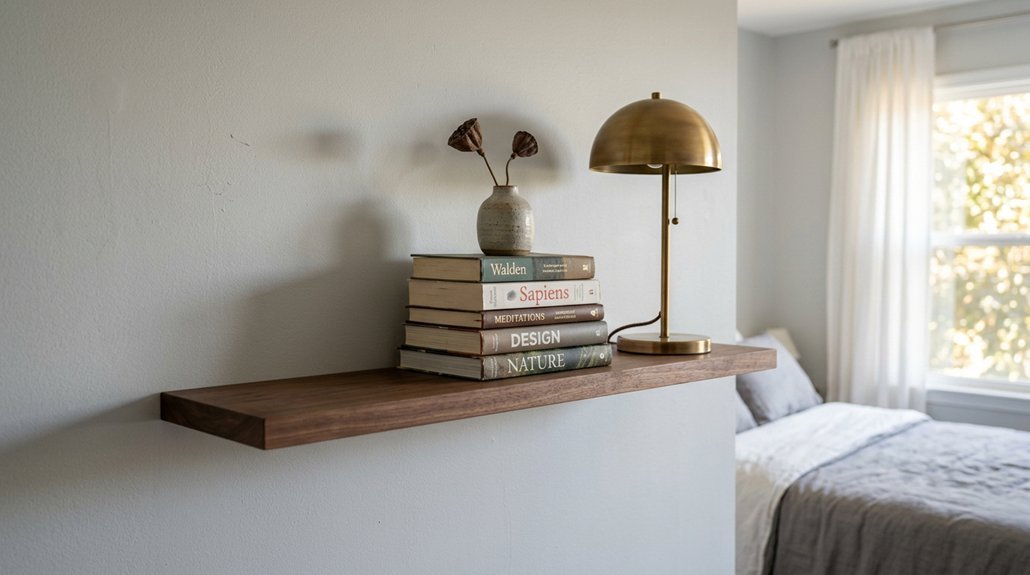


Your oak shelf crashes down at 2 a.m., scattering vintage records across the floor, because you trusted drywall anchors with forty pounds of vinyl. You didn’t know the real limit, and now you’re sweeping up splinters.
Here’s what actually determines whether your floating shelf holds ten pounds or two hundred.
How Floating Shelves Hold Weight (and Why They Fail)
How do floating shelves really stay put? You’re relying on mounting hardware, specifically shelf brackets hidden inside the shelf, that anchor into wall studs or blocking you’ve installed between studs.
Your weight capacity hinges entirely on stud attachment: each stud you hit adds roughly 50 pounds of per-stud load, while drywall anchors alone deliver only 10 to 15 pounds. For serious storage, you’re installing blocking, or choosing a heavy-duty floating shelf with multiple rods, which can reach 240 pounds.
Your real enemy is poor installation. Drywall-only mounting fails under meaningful weight; you need stud contact for security. When you notice drooping, you’re performing sagging correction by shimming behind brackets to compensate for wall irregularities, truing the shelf front to back.
Recommended Products

【Suitable For 2*4” Wood Studs】Goovilla hidden shelf brackets is desiged with a 1.57*1.38” backplane. The small size and 3 close together screw holes match the narrow 2×4 inch (actual size is 1.5*3.5” ) wood studs thoroughly.

✓ HIGH-QUALITY METAL MATERIALS: Our shelf support is made of thick and heavy duty iron materials.Features a thick black matte surface coating that delivers enhanced water resistance and effective anti‑rust performance for long‑term daily use.
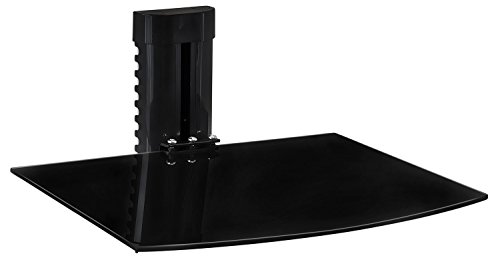
GAME NIGHT, ORGANIZED – Keep your console, streaming box, or cable box right where you need it, off the console table and out of the way, so your gaming corner or home theater setup stays clean and clutter-free.
What Changes Your Floating Shelf’s Real Weight Limit
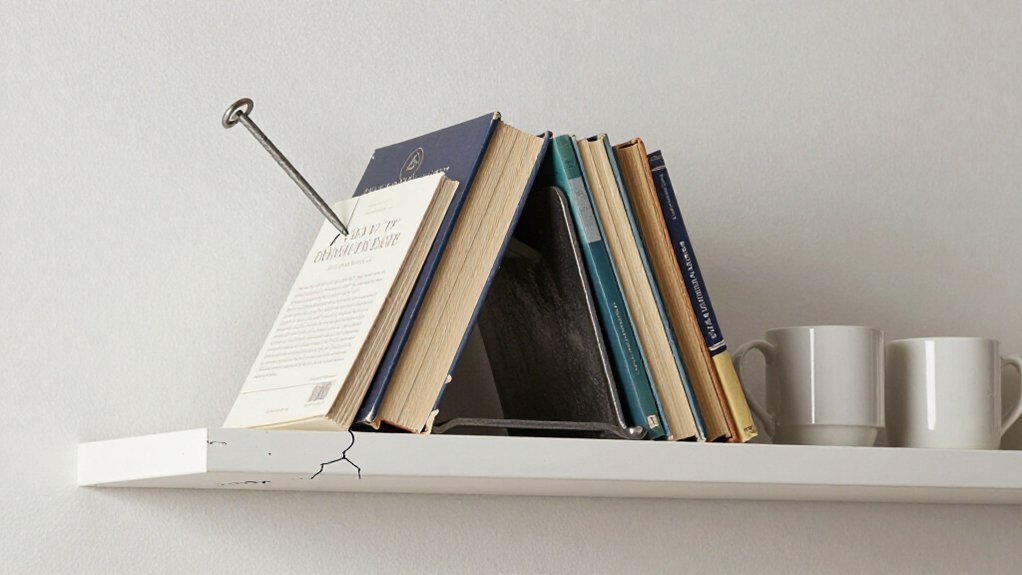
Your floating shelf’s real weight limit depends on three factors you can control: bracket type, wall anchoring quality, and load distribution physics. You’ll need to match your bracket’s strength to your wall setup, since a heavy-duty three-rod bracket means nothing if it’s anchored poorly.
Understanding how weight spreads across the shelf, especially with deeper boards, keeps your installation safe and functional.
Recommended Products

Package Including: You will receive 4Pcs Black Solid Iron Floating Shelf Bracket Blind Shelf Supports with 8pcs screws, 8pcs wall plugs. Size: Rod length 75mm/3inch, 10mm/0.39inch in diameter. Backplate size: 70x15x4mm/2.75x0.59x0.15inch(L*W*T).
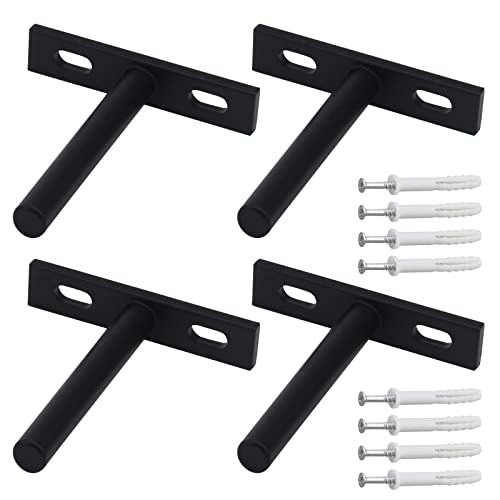
Package Content: 4Pcs 3-Inch Shelf Bracket, 8Pcs Strong Screws, 8Pcs Wall Plugs

Superior Quality: Our floating shelf bracket is expertly crafted from premium steel, ensuring exceptional durability and an impressive weight capacity of 110lbs.
Bracket Type Matters
Why do some floating shelves sag under a few books while others handle heavy kitchenware without a whisper of strain? The bracket type you choose drives your real weight capacity more than anything else. Concealed mounting hardware with more rods and higher-profile brackets dramatically boost what you can safely store.
Your bracket type determines whether you’re working with a modest single-stud setup or a robust two-stud mounting with proper blocking behind the wall.
- You watch your favorite dishes crash because you picked flimsy hardware.
- You feel frustrated when shelves bow under minimal weight.
- You rest easier knowing three-rod configurations handle up to 240 pounds.
- You protect your investment by matching shelf depth to bracket span for optimal load distribution.
Skip drywall-only anchors, secure into wall studs, and measure twice.
Wall Anchoring Quality
Even the sturdiest bracket fails if it isn’t anchored right, so now let’s look at what really locks your shelf in place.
Finding Solid Backing
Grab your stud finder, locate the studs, and mark them clearly. Each stud you hit adds roughly 50 pounds of weight capacity, so a two-stud mounting gives you about 100 pounds total. No studs where you need them? Install blocking or a backer board between studs during construction, or open the wall to add it.
Drywall Limitations
Drywall alone won’t hold heavy loads. Wall anchors work for light shelves, but you’ll want to avoid them for anything substantial. More rods and longer brackets help, yet your bracket installation is only as strong as what’s behind it.
Pro Move
Add continuous blocking behind the full shelf length. This improves load distribution and cuts sag better than individual studs alone.
Load Distribution Physics
Where does all that weight actually go once you’ve loaded up your shelf? You transfer force through the shelf, into the rods, and down to your mounting points. Your load capacity depends heavily on rod count and shelf length. More rods mean more strength.
Each stud you hit adds roughly 50 pounds of real support, so two studs beat one every time. Blocking behind studs creates the strongest install, turning your studs into solid landings for heavy loads. Skip drywall anchors alone, they fail under real stress.
Your weight distribution choices make or break performance:
- Center loading keeps stress even, you’ll avoid dangerous sag.
- End loading creates lever stress, you’re asking for failure.
- Wall backing matters, studs or blocking beat hollow anchors.
- Proper planning saves your shelf, your wall, and your belongings.
Calculate Bracket Size for What You’re Storing
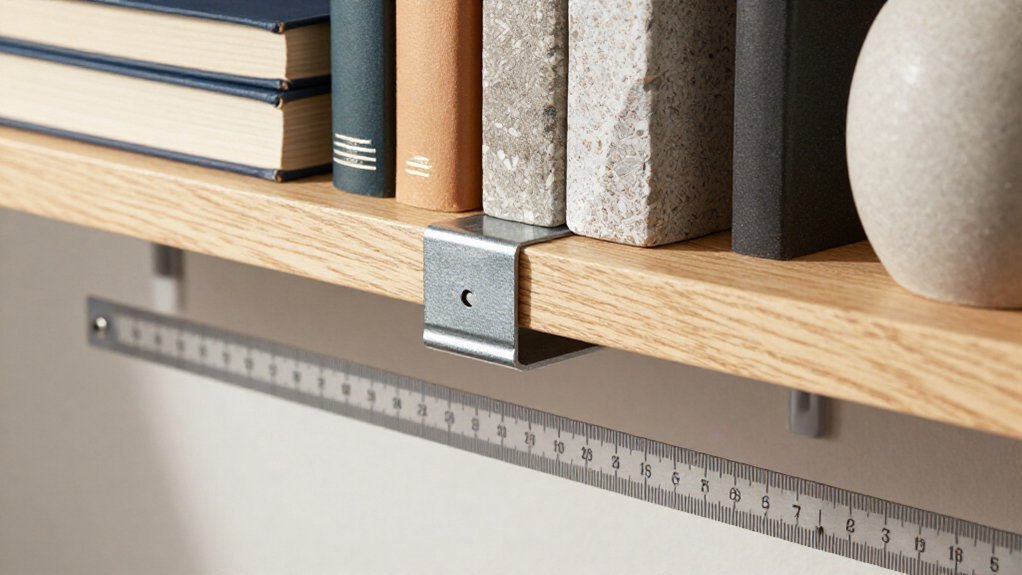
How much can your shelf actually handle before it fails? You need stud mounting for serious weight capacity, but bracket size determines your limit. Each wall stud adds roughly 50 pounds of support. Match your shelf length and rod count to your load bearing needs.
A three-rod, heavy-duty brackets configuration handles around 240 pounds. Two-rod setups fall far short. Blocking behind studs boosts capacity dramatically compared to drywall-only installation. For two-stud mounting, expect 30–50 pounds with common bracket designs.
Your installation guide should specify rod count and stud requirements clearly. Scale up bracket size as you add weight. More rods equal more total support. Check your wall studs, calculate your needs, and buy hardware that exceeds them.
Recommended Products

STRONG LOAD-BEARING CAPACITY:The wall anchor is crafted from high-quality hard nylon plastic with durable high-strength fiberglass. Its zinc-plated screws feature deep threads for maximum durability, capable of supporting up to 75 pounds. This sturdy anchor is perfect for hanging heavy duty items.

3 SIZES FOR EVERY ROOM & EVERY PROJECT Small (1 3/16") anchors keep picture frames, wall art, family photos, and decorative hooks hanging straight — not tilting every time a door closes. Medium (1 3/8") sizes hold bathroom shelves, mirrors, towel racks, and curtain rods securely in place, even through daily use in steamy bathrooms. Large (1 9/16") anchors stop floating shelves, wall organizers, entryway hooks, TV wall mounts, and everyday storage projects from sagging or pulling away from the wall. One dry wall anchors and screws kit for the jobs homeowners actually tackle every day — no guesswork, no extra trips to the hardware store

【100 Pcs Upgraded Quenched Dry Wall Anchors Kit】100pcs heavy-duty metal anchors and self-drilling screws quenched for higher hardness or strength, better toughness, longer durability, and more stable threads. As professional sheet rock anchors and metal wall anchors, they fit drywall, gypsum board, and lightweight bricks, eliminating the need for extra hardware in all your wall mounting tasks.
Why You Need Studs or Solid Blocking
You’ve sized your brackets, but your mounting surface determines if they actually hold. Without studs or solid blocking, you’re trusting your shelf to drywall. Drywall fails.
Each wall stud supports roughly 50 pounds. Stud finding isn’t optional; it’s survival.
Stud finding isn’t optional; it’s survival. Each stud holds roughly 50 pounds—find them or face the crash.
Solid blocking spanning between wall studs creates the strongest mounting surface. You get even load distribution and real weight capacity. Screw fasteners bite deep into wood, not dust.
Use hollow-wall anchors only when you’re out of options, for light display loads. Never for your heavy stuff.
Here’s what happens when you ignore this:
- Your shelf crashes at 2 AM, shattering everything you loved.
- You watch your investment, your books, your heirlooms, destroyed.
- You pay twice: once for the shelf, again for the repairs.
- You lie awake, listening for the crack that means it’s over.
Brick or concrete needs masonry anchors. Plaster needs toggle bolts. Metal studs need special screws.
Match your method to your wall.
Recommended Products
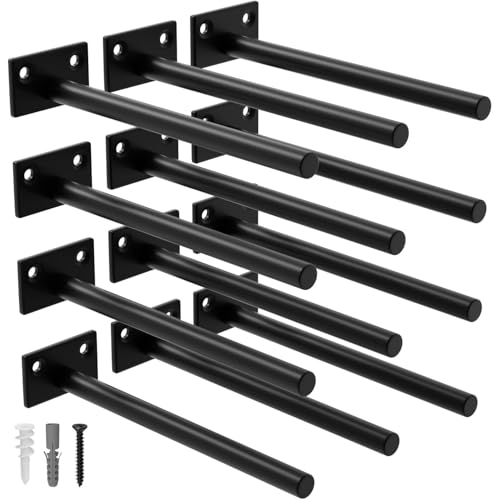
Superior Quality: Our floating shelf bracket is expertly crafted from premium steel, ensuring exceptional durability and an impressive weight capacity of 110lbs

Heavy-Duty Floating Shelf Bracket: Our heavy-duty shelves is made of high-quality nickel-plated iron, each supporting weight up to 110lbs/50kg. Sturdy and durable, not easy to rust, ensuring the life of the floating shelf.

【Heavy Duty Iron & Anti-Rust Coating】 These shelf brackets are crafted from thick, heavy-duty iron, stamped and bent in one piece with no welds. Each floating shelf bracket delivers superior toughness and can hold up to 150 pounds per pair. Our floating shelf brackets feature a thick, rust-resistant coating that protects against moisture in any environment. Every shelf bracket is designed to increase friction for added stability. These shelf brackets won't break even after extended use, and the durable finish keeps your shelf secure for years to come.
Fix Sagging With Shims, Not a New Shelf
Even the sturdiest floating shelf can tilt forward after installation, its front edge dipping lower than the back. You don’t need a new shelf. You need shims.
Walls are rarely flat, so sagging often signals poor leveling, not weak floating shelves. Grab your level, check the bracket, and slip shims behind it where gaps appear. This restores shelf alignment, reduces lever stress on the rods, and protects your weight capacity.
For heavy loads, you’ve already secured blocking or hit studs. Now fine-tune. Insert shims, relevel, and slide the shelf back onto the brackets. Tighten everything. Shimming is standard trade practice, it costs pennies, and it takes minutes. Your installation stays solid, your shelf stays straight, and you move on.
Recommended Products

【Standard 90° bending】In order to ensure that each shelf bracket can be at 90° to the maximum extent possible, we add a rigorous picking process before the shelf brackets are packaged. The standardized 90-degree design is so important that it’ s the objective factor in ensuring that items remain level and do not tip over after being placed on the board(board is not included).
【Suitable For 2*4” Wood Studs】Goovilla hidden shelf brackets is desiged with a 1.57*1.38” backplane. The small size and 3 close together screw holes match the narrow 2×4 inch (actual size is 1.5*3.5” ) wood studs thoroughly.

【Heavy Duty Iron & Durable Coating】The WEKIS J shelf brackets are made of 1/5 inch thickness solid cast iron, every 2 shelves brackets can load a weight of 160lbs-200lbs, with more shelving brackets, you can build a powerful wall shelf. Well-paint matte black with high quality rustproof coating, not easy to rust and fade (board is not included)
Match Shelf Thickness and Depth to Your Bracket Tier
Why guess if your shelf will hold? Match your shelf thickness and bracket tier precisely, and you’ll eliminate failure before it starts. Each tier demands specific depth: LD handles 8“, MD spans 10“, HD reaches 14“, and XD extends to 17“. Your load distribution depends entirely on this pairing. Deeper shelves pull weight farther from the wall, requiring sturdier rails and proper stud anchoring with 2.5″ to 3” screws. Skip the backer/blocking, and you’ve wasted your money.
- Feel the relief when your 1¾” HD shelf locks flush, zero wobble, zero doubt.
- Picture your heaviest books resting easy, rods fully engaged, no midnight crash.
- Imagine explaining to guests why your shelves never sag, the quiet pride of doing it right.
- Avoid the hollow-core mismatch nightmare, rod insertion failing, your display on the floor.
Recommended Products

Package content: 4 pieces of 3 inch white shelf brackets, 8 pieces of strong screws, 8 pieces of wall plugs
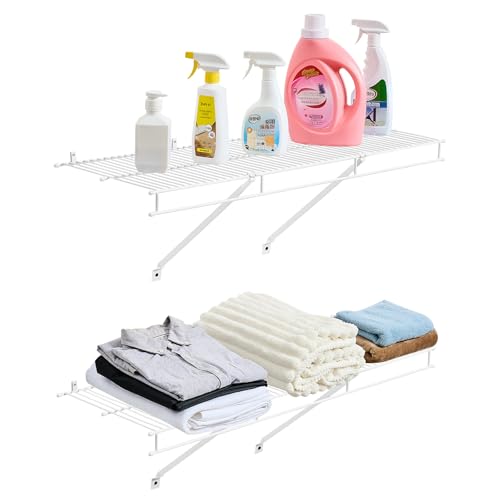
Dual-Shelf Set: This wire shelf kit can fit various closet and wall spaces, expanding storage without replacing original cabinets. It supports side-by-side and spliced installations, and the two-pack set meets different width and height needs

34 INCH HEAVY DUTY FLOATING SHELF BRACKET: The solid steel bracket allows you to hang shelves 34” and larger without compromising the aesthetic of your home décor. For shelves between 6.5” - 1/4” deep.