
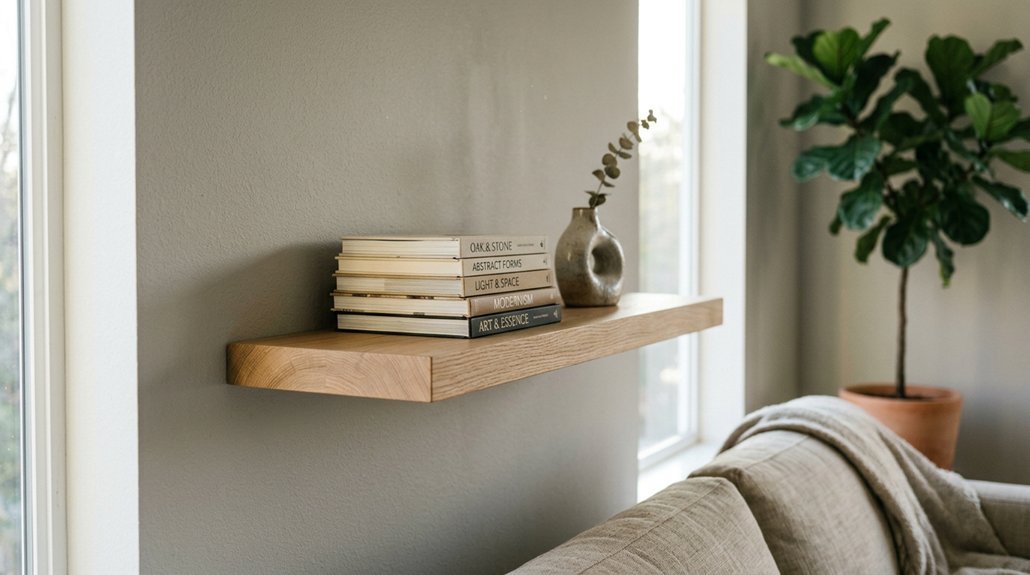


You hang a heavy cookbook collection on sleek floating shelves, only to find them sagging within weeks because the drywall anchors couldn’t handle the load. Studs provide the backbone for secure installs, but they’re not always where you need them. You have options when they miss the mark. Here’s how to decide what’s right for your wall and your stuff.
Mark Stud Locations and Plan Your Layout
Before you install a single bracket, you’ll need to find your studs and map your layout precisely.
Grab your stud finder and scan horizontally across the wall. Mark each stud’s edges with a pencil, then measure 16 inches to locate adjacent wall studs. Tap the surface to double-check; solid sounds mean studs, hollow means drywall.
Drill a tiny test hole if you’re unsure, confirming wood sits behind. Mark each stud’s center for screw placement.
For centered positioning, align your shelf over furniture or between trim, leaving 1-2 inches clearance from doors. Draw a light horizontal line at shelf height using your level. Transfer bracket holes from the bracket onto this line.
Your mounting layout is now set. Pilot holes come next, or drywall anchors if you miss studs. Account for shelf weight in your plan.
Recommended Products

【Suitable For 2*4” Wood Studs】Goovilla hidden shelf brackets is desiged with a 1.57*1.38” backplane. The small size and 3 close together screw holes match the narrow 2×4 inch (actual size is 1.5*3.5” ) wood studs thoroughly.
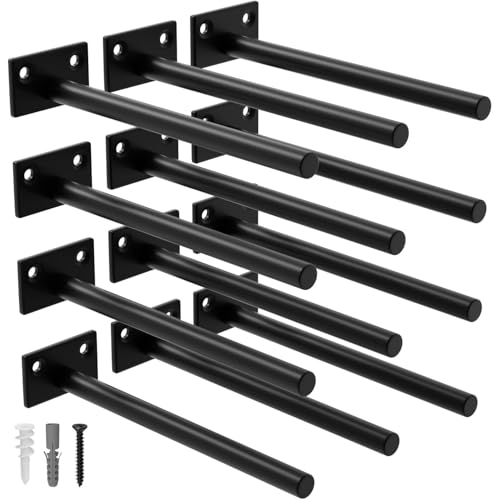
Superior Quality: Our floating shelf bracket is expertly crafted from premium steel, ensuring exceptional durability and an impressive weight capacity of 110lbs

Heavy Duty design, maxium support weight of 100lb for a pair of this L bracket. Matte black powder coat finish. Creating a rustic, reclaimed, salvaged look,perfect for your home, office, garage, work space or anywhere else
Secure Shelf Brackets Directly Into Studs
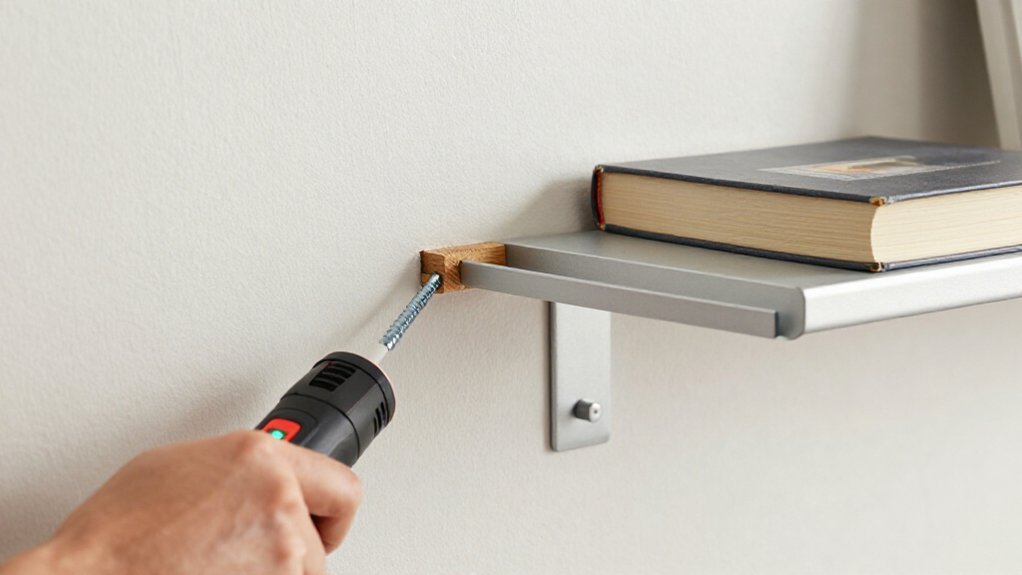
Test gradually to confirm load capacity before loading fully. Done right, this holds.
Recommended Products

✓ HIGH-QUALITY METAL MATERIALS: Our shelf support is made of thick and heavy duty iron materials.Features a thick black matte surface coating that delivers enhanced water resistance and effective anti‑rust performance for long‑term daily use.

The bracket has a 1" backplate and is designed for use with boards 1.5" thick or more.NOTE: The board thickness we refer to is the actual (not nominal) size.

Anchor and screw Kit Includes: 25 Pcs Zinc Metal Drywall Anchors, 25 pcs #8 x 1-1/4'' Phillips Screws
Add Blocking Behind Drywall When Studs Don’t Align
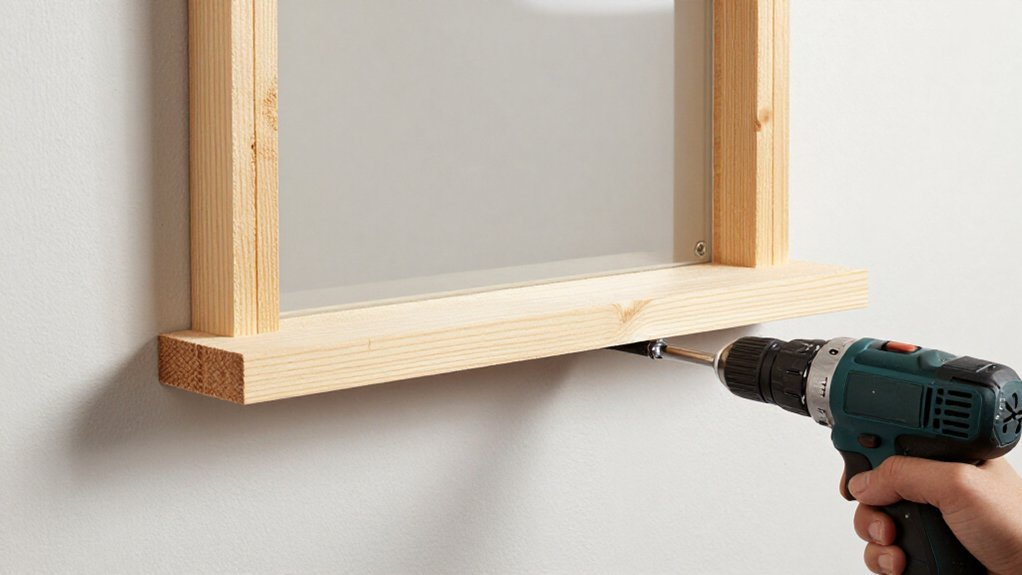
What do you do when studs fall in all the wrong places? You add blocking behind drywall to create solid mounting points.
Locate adjacent studs with a stud finder, then install horizontal backing between them. Use plywood or dimensional lumber to build a continuous backer, fastening it securely to the surrounding studs before replacing drywall.
This blocking creates a landing zone for brackets when mounting heavy shelves, ensuring proper load transfer across the wall surface. After installation, verify level and confirm precision alignment between your brackets and the hidden blocking.
Drywall anchors alone won’t handle meaningful weight. Blocking behind drywall distributes force properly, giving you reliable support for substantial loads without relying on lucky stud placement.
Recommended Products

Compatible with: Greenlee 868 screw anchor expander; Anchor 84299 Power Drill Part; Caulking Anchor Size 1/4"-20".

TOGGLER SNAPTOGGLE Drywall Anchor – 1/4"-20 UNC Zinc-Plated Snaptoggle Anchors – Holds 265 lbs on Drywall, 802 lbs on Concrete Block – Toggle Bolts for Mounting Cabinets and TV – 20 Pack (With Bolts)

Ultra-Reliable Drywall Mounting with Toggle Bolt Design Unlike standard plastic anchors, our drywall anchors feature a heavy-duty spring toggle bolt that expands behind drywall, plasterboard, and hollow walls. This creates a rock-solid hold that won’t pull out, making it ideal for hanging objects.
Choose Anchors That Hold Without Studs
Where should you turn when studs aren’t an option? You’ll rely on hollow-wall anchors rated for serious drywall duty. Look for 1/4″-20 hollow-wall anchors with proven weight capacity, up to 270 pounds in standard half-inch drywall. You’ll double up anchors per bracket for heavier items, spacing them to improve load distribution across the surface.
Check your backing first. If you’ve added plywood backing or blocking (discussed previously), you’ll anchor into that solid material instead of hollow drywall alone. Without backing, you’ll need premium anchors, but you’ll recognize their limits; anchors supplement rather than replace proper structural support.
Follow manufacturer drill sizes exactly, torque carefully, and test gradually. If you spot movement, you’ll upgrade to stud-fastened installation or add blocking. A stud finder confirms what’s behind your wall before you commit.
Recommended Products

🎮DIFFERENT LOCATION🎮Locate Xbox Series S near TV (left side, right side) or behind TV and put the XSS console into wall mount with well fit

MULTIPLE SIZE SELECTION – This versatile kit includes toggle bolts, available in 1/8 toggle bolts, 3/16 toggle bolts, and 1/4 toggle bolts. These toggle bolts for drywall offer flexibility for diverse mounting and load-bearing needs. Replaces small toggle bolts and heavy duty wall anchors.

CREATE MORE STORAGE: A recessed shelf featuring three shelves. It has a black lacquered finish and vertical panels for an elongating look. The medicine cabinet shelves create more space and organize your tchotchkes in style without taking up valuable floor space.
Calculate Weight Limits Before You Load the Shelf
You’ve got your anchors selected, now you need to know what those brackets can actually handle before you start loading up your shelves. Your weight capacity hinges on your mounting method: drywall anchors typically manage 25-50 pounds, while hitting two studs or adding blocking behind drywall delivers hundreds.
To estimate safe loads, add your shelf weight, hidden hardware weight, and items you plan to store. Divide that total by your number of fasteners. Better load distribution means spreading weight across more anchors, or installing a ledger board for extra reinforcement.
Watch for a sagging edge, it signals insufficient support. Fix it by verifying your anchor capacity, adding fasteners, or reinforcing with blocking. Match your system to real demands, not best-case specs.
Recommended Products

Powerful Rare Earth Magnets Find Studs Fast: Strong magnetic technology detects nails and screws behind drywall, plaster, and paneling to help locate wood and metal studs without batteries, calibration, or false readings.

What You Get: You will receive 2 magnetic stud finders, specifically designed to locate screws and nail heads in drywall construction. They pinpoint their positions, significantly improving efficiency for wall installation and renovation

Accurate Stud Detection: Bright indicator light alerts you to wood studs and metal studs for reliable results. Ideal for drywall, plaster, and wood walls.
Spot Early Signs of Shelf Failure
Why wait for a crash when your walls already whisper warnings? You spot shelf failure early by watching for loosened bracket screws, visible gaps, and wobble when you press down. Sagging at the front edge screams trouble. It means your load distribution or wall mounting strength falls short.
Check for drywall cracks around fasteners. These signal stress transfer and anchor or stud engagement problems. If your shelf sits unevenly after installation, your brackets likely missed studs or backing. You tighten screws repeatedly, new gaps keep appearing, your backing behind the drywall loosens.
Act fast when you see these signs. Remove weight immediately, inspect every bracket screw, and verify anchor placement. Test for wobble weekly. Catching sagging early saves your wall, your items, and your budget from bigger repairs.
Recommended Products
【Suitable For 2*4” Wood Studs】Goovilla hidden shelf brackets is desiged with a 1.57*1.38” backplane. The small size and 3 close together screw holes match the narrow 2×4 inch (actual size is 1.5*3.5” ) wood studs thoroughly.
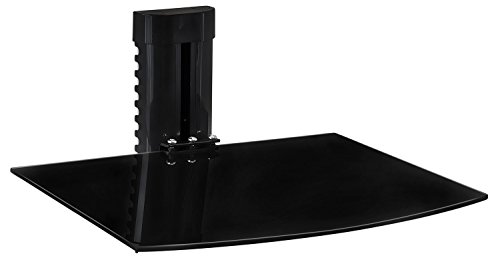
GAME NIGHT, ORGANIZED – Keep your console, streaming box, or cable box right where you need it, off the console table and out of the way, so your gaming corner or home theater setup stays clean and clutter-free.

[MINIMALIST FLOATING ILLUSION & EASY SETUP] Achieve that highly-desired modern floating look without needing advanced woodworking skills. Our heavy-duty blind brackets hide the robust support rod directly inside the wood, creating a stunning floating effect for your custom shelving. Perfect for kitchen renovations, farmhouse decor, or modern displays, delivering high-end aesthetics with straightforward, beginner-friendly installation.
Install Your Floating Shelf Step by Step
How do you turn a bare wall into solid storage without disaster? Follow these installation steps, and you’ll get it right.
First, grab your stud finder and locate the studs. Mark bracket positions with a level, ensuring perfect alignment. Drill pilot holes, then attach mounting hardware directly into studs for maximum weight capacity. No studs available? Use drywall anchors, but know your weight capacity drops substantially.
Mount into studs for strength; anchors work, but your weight capacity drops significantly.
For heavy loads, install blocking between studs; it’s far stronger than drywall alone.
Slide your shelf onto hidden rods, or screw it in place per your hardware. Test stability gradually, distributing weight evenly. Avoid edge-loading, especially with anchors.
Check your work with a level once more. Your shelf should hold firm, ready for daily use.
Recommended Products

Exceptional Strength & Durability: Crafted from high-grade carbon steel, our 4-inch heavy duty floating shelf brackets support up to 125 lbs, ensuring secure display of cherished items across various rooms.

【Heavy-Duty & 90° Angle】Each pair of the 1/5-inch thick brackets, crafted from high-quality iron, can support up to 150 lbs when used with the included high-strength screws. The precise bend ensures a perfect 90° angle, preventing any tilt.

Sturdy & Reliable: Our 8-inch heavy duty floating shelf brackets, made from carbon steel, ensure durability and support up to 100 lbs. Ideal for kitchen shelves, fireplace mantels, and office storage.
Hang Your Floating Shelf: With or Without Studs
You can secure your floating shelf by driving brackets directly into studs, which gives you the strongest hold for heavy items like books and dishes. When studs aren’t available, you’ll rely on hollow-wall anchors or toggle bolts, though you’ll need to cut your expected weight capacity roughly in half and use at least two anchors per bracket for even load distribution.
Choose stud-mounted shelving for reliable, permanent storage, or pick anchor-based options when you’re working around obstacles like plumbing or wiring, but test your setup gradually either way.
Recommended Products

Toggle anchor installs behind 3/8"- to 3-5/8"-thick hollow materials including gypsum board, drywall, and concrete block to provide a secure hold from within the mounting material

[Package Include]: In this package, you can get 20pcs 1/4"-20 premium stainless steel concrete knurled drop in anchors, sufficient quantity can fully meet your different needs.

[Details] Screw anchor expander replacement part, numbered #868, fits anchor 84300.
Stud-Mounted Shelving
Where exactly should you anchor a floating shelf so it won’t crash down in six months? You mount directly into studs, period. Grab a stud finder, locate the centers, and mark them clearly. Align your brackets with these marks, then drill pilot holes to keep everything level and straight.
For maximum load capacity, drive screws 1 to 1.5 inches past the drywall into solid wood. This gives you support that drywall anchors simply cannot match.
Always test stability gradually after install, adding weight slowly. When studs don’t line up with your plan, install blocking behind the wall for distributed support. Use a level throughout mounting to prevent uneven, stressed brackets.
If you’re hanging something heavy, skip shortcuts. Stud-mounted shelving beats alternatives for durability, and you’ll thank yourself later.
Anchor-Based Options
What happens when studs aren’t exactly where you need them? You’ll turn to anchor-based options, and they’ll work fine for lighter loads.
Drywall Anchors for Light to Medium Loads
You can secure your installation bracket with drywall anchors when you’re hanging lightweight items. Plan on using two anchors per bracket, and don’t push past the weight capacity listed on the package. For a bit more security, add a ledger underneath, or spread the load distribution across multiple points.
Heavy-Duty Hollow-Wall Anchors
Quality hollow-wall anchors can handle up to about 270 pounds each in standard half-inch drywall. That’s serious holding power, but you’ll still want blocking or backing behind the wall for anything substantial. Cut into the drywall, add solid blocking between studs, then patch and paint.
Test your setup gradually. Follow the manufacturer instructions exactly.