
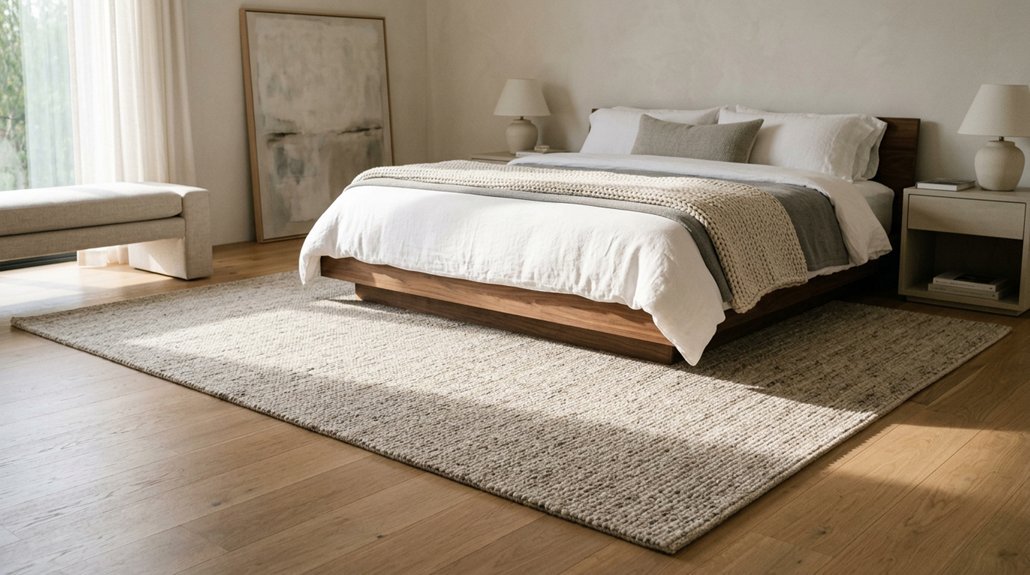


You don’t need a designer budget to get your rug placement right. Start by measuring your bedroom, noting doors, vents, and fixed furniture. You’ll match the rug to your bed frame next, whether you have a twin, queen, or king.
Then you’ll pick your placement style: centered under the bed, anchored with nightstands, or layered with runners. The right floor border matters too, leaving 12–18 inches of bare floor around your rug’s edges. You’ll also need to think about materials that hold up underfoot, colors that work with what you already own, and how to keep everything flat and slip-free.
Small rooms? There are adjustments for that. Each step builds on the last, and getting them in order saves you from moving heavy furniture twice. You’ll want to see how the measurements actually translate to your space.
Measure Your Bedroom for Rug Placement
How do you avoid buying a rug that swallows your room or disappears under your bed? Start by measuring your bedroom dimensions, then subtract about 36–48 inches from both length and width to find your ideal rug size. This calculation leaves roughly 18–24 inches of bare floor visible around all edges, creating balanced proportions without crowding your space.
For placement distance, ensure your rug extends beyond the bed’s sides and foot by that same 18–24 inch measurement. This creates a plush landing area when you wake. If your bedroom dimensions allow, consider two small runners flanking the bed or one long runner at the foot for symmetry and easy access.
You’ll ground the bed, connect surrounding furniture, and achieve a cohesive layout that feels intentional, not accidental.
Recommended Products

Soft Area Rug: This 8'x10' area rug features chic, faded floral motifs in a vintage color palette.Blending retro, flowers and boho styles, it complements any décor. A sturdy, easy‑clean synthetic rug, it’s luxuriously soft—perfect for barefoot comfort
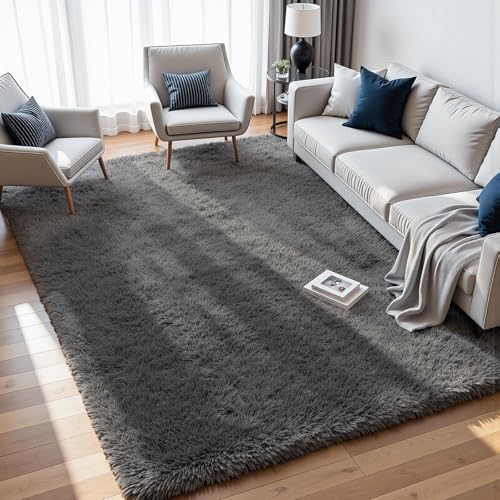
[Ultra Soft Fluffy Area Rugs for Living Room] 8x10 living room rug treat your feet to cloud-like comfort with our ultra-soft, high-density 1.7-inch plush microfiber pile—designed to stay fluffier longer without shedding. Whether walking, sitting, or lying down, each step feels luxuriously soft. Eco-friendly fibers resist matting, keeping the plush texture season after season. Ideal for bedroom, living room, or nursery.
Match Rug Size to Your Bed Frame
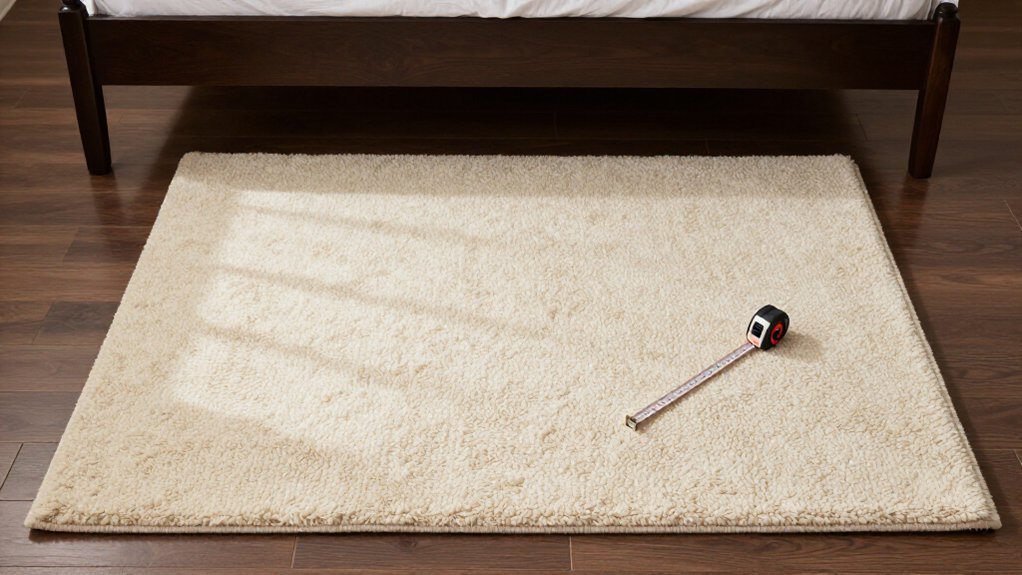
You’ll want to match your rug size directly to your bed frame for proper balance. For a queen bed, grab an 8×10 rug, which leaves 18 to 24 inches of bare floor around the sides and head. King beds need a 9×12 for clean proportion, and always extend the rug 18 to 24 inches past the bed’s sides and foot for a soft landing zone.
Recommended Products

Modern textured design – High-low pile creates a natural play of light and shadow across the solid cream beige surface. Subtle, but full of character.

CLOUD LIKE SOFTNESS & SUPREMELY COZY: Treat bare feet to absolute comfort. Crafted from premium faux wool, this living room rug delivers a luxuriously velvety soft texture that shields toes from cold floors. The tightly woven fibers to be non-shedding and durable, provides a relaxing environment.

Cloud-Like Softness Meets Durability: Experience cloud-like softness underfoot - gentle enough for morning barefoot walks, tough enough for kids and pets. This Medium-pile 9x12 area rug effectively repels pet hair, dander, and stains. Its gentle texture is kind to paws and claws, helps protect floors from scratches and holds up to chewing or digging.
Bed Size Basics
Where do you start when matching a rug to your bed? You begin with your bed size, then work outward.
Rug Size, Bed Size, Room Proportion
King beds pair with 9×12 rugs; queen beds fit 8×10 rugs. This pairing ensures a balanced border around your frame. You want 18–24 inches of bare floor showing beyond the rug edges for proper room proportion.
The rug should extend past your bed’s foot and sides by that same 18–24 inches, giving you a plush landing area when you rise. Larger beds demand larger rugs to maintain symmetry and anchored visuals.
If your room runs tight, skip the full rug. Use two matching runners, one on each side, wider than your nightstands. This keeps proportion without crowding your space.
Rug Dimensions Guide
Now that you’ve got your bed size locked down, let’s match it to the right rug dimensions.
Rug Dimensions by Bed Frame
- King bed: Choose a 9×12 rug for balanced borders and solid anchoring.
- Queen bed: An 8×10 rug works best, with 18–24 inches of bare floor showing around edges.
- Full bed: Use a 6×9 rug, or consider two small runners for narrow spaces.
Key Rug Placement Rules
Extend your rug 18–24 inches past the foot and sides of your bed. This gives you plush landing space and keeps proportions right.
For most bedroom layouts, leave 12–18 inches of visible floor around the rug edges. This floor show-through prevents crowding and maintains visual balance.
Scale your choice to your room size: larger rooms need bigger rugs, tighter spaces need smaller ones or runner alternatives. Match rug dimensions to your bed frame first, then adjust for your specific bedroom layout.
Choose Your Bedroom Rug Placement Style
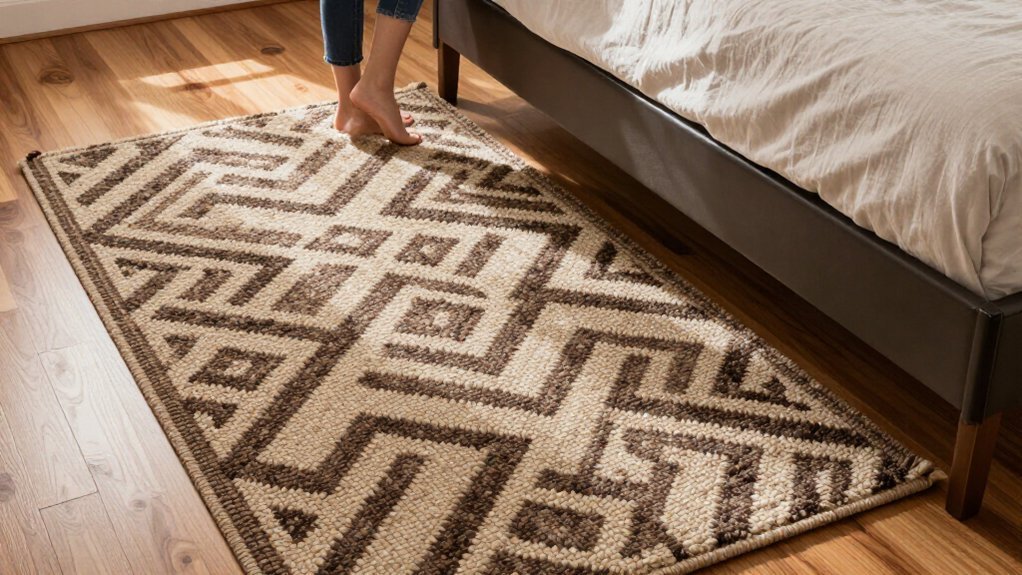
You’ll want to pick a placement style that fits your space and daily routine, whether that’s anchoring the rug under the bed, framing the foot of it, or running pieces along each side. Under-the-bed placement works best when you extend the rug 18–24 inches past the mattress edges, giving you a soft landing spot each morning.
For foot-of-bed or beside-the-bed setups, you’ll focus on proportion and symmetry, keeping walkways clear and visual weight balanced.
Recommended Products

THE ORIGINAL EXTRA STRONG GRIPPER: our trusted Gorilla Grip nonadhesive rug pads offer a unique, dual sided grip that firmly holds onto both the rug pad and your hard floor to help prevent rug movement

STRONG NON-SLIP GRIP: Designed with a powerful double-sided grip, this rug pad effectively secures your carpet, preventing slipping, bunching, or shifting. Whether in high-traffic areas or for daily use, it keeps your carpet flat and stable, providing a safer experience.

Unique Design: Do you still worry about the traditional glue rug tape harm your floor ? This gripper uses VACUUM TECH design which grips hard smooth floors firmly and easily, this design can protect your floor perfectly as no glue used on floor. But it does not work for rug on carpeted floor. It does not work for rubber backed rug ,jute rug or fluff backing rug.
Under the Bed
Why settle for cold floors when you can wake up to something softer? For rug placement under the bed, you’ll extend the rug past the foot and sides by 18 to 24 inches, creating a plush landing for your feet. Your bedroom rug size depends on your bed: choose 8×10 for queen beds, or 9×12 for king beds, each with that 18 to 24 inch border. You want balanced symmetry, not lopsided edges.
In larger rooms, a substantial rug anchors the space and builds intimate zones. In smaller rooms, you’ll pick a rug that doesn’t overwhelm, keeping proportionality intact. Your rug should extend consistently beyond the bed’s footprint, with 12 to 18 inches of visible floor around the edges.
Alternative approach: position two runners, wider than your nightstands, flush to each side.
At the Foot
How do you add warmth without crowding your floor? You choose rug placement at the foot of bed, a practical solution for tight spaces and wall-pressed beds. This style extends 40 cm beyond your mattress base, giving you coverage without waste.
Bedroom Rug Size Guide for Foot Placement:
- Small rugs (3×5 ft): Tuck under a bench or ottoman
- Medium rugs (4×6 ft): Anchor the space with subtle texture
You gain coziness, especially over wall-to-wall carpet, and you keep floors uncluttered. Natural fiber options, like jute or sisal, add depth through understated contrast.
Layer a small rug beneath bedroom seating at the bed’s end for purposeful styling. This approach consumes minimal floor area while defining your sleep zone with quiet intention.
Beside the Bed
Where do you step when morning arrives? You plant your feet on cold hardwood, or you choose bedside rugs that warm your first moments.
Side Placement Strategy
You place two smaller rugs, 60×120 cm or 80×150 cm, beside your nightstands. This creates symmetrical balance, anchoring each side without crowding your floor. You maintain even access, you avoid visual heaviness.
Runners work too. You get soft edges, you keep things minimal, you skip the central rug entirely.
Sizing Rules
You measure carefully. Your rugs must exceed nightstand width, framing each side with cohesive padding. You protect foot traffic paths, you prevent stubbed toes.
Room Compatibility
You adapt this approach for asymmetrical layouts. The bed stays central, the side textiles ground the space, you achieve focus without rigid formality.
Position Nightstands on or Off the Rug
When you’re deciding where your rug stops and starts, nightstand placement becomes your first real test. Most rooms favor starting the rug size so it just sits in front of the nightstands, leaving the nightstands on bare floor for anchored bed grounding. This rug placement keeps your bed centered and visually grounded without overextending your budget.
You can extend the rug under the bed and nightstands, or keep nightstands on the floor while the rug anchors just the bed area. For an ultra-luxurious feel in a large primary suite, extend under the bed, nightstands, and bench, but assess your room scale first.
Center the rug on the bed, not the room’s middle, so the bed stays the focal point. When asymmetry exists, align the rug’s edge with the nightstand line to create order without forcing perfect symmetry.
Recommended Products
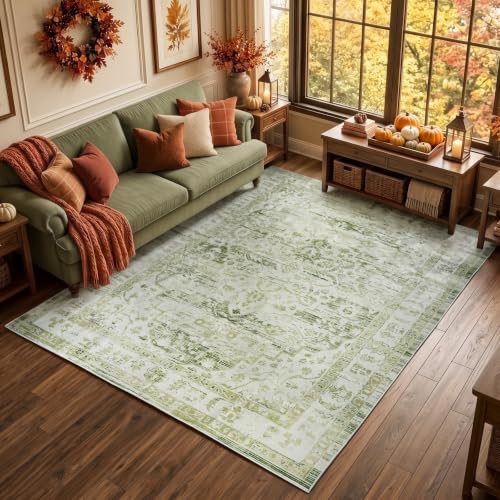
Vintage Floral & Modern Style: These vintage area rugs for living room classic vintage green floral pattern area rugs blends seamlessly with modern home decor, pet dander and hair won't get trapped inside, prevents pets from chewing or scratching, stains and dirt are easily removed. Its plush texture surface creates a relaxing feel underfoot, perfect for unwinding after a long day. perfectly matching farmhouse, boho, and contemporary styles. This versatile rug elevates the look of your rooms, or entryway.

Vintage Floral & Modern Style: These vintage area rugs for living room classic vintage beige floral pattern area rugs blends seamlessly with modern home decor, pet dander and hair won't get trapped inside, prevents pets from chewing or scratching, stains and dirt are easily removed. Its plush texture surface creates a relaxing feel underfoot, perfect for unwinding after a long day. perfectly matching farmhouse, boho, and contemporary styles. This versatile rug elevates the look of your rooms, or entryway.

Designed to withstand everyday wear, this 5' x 8' area rug is the perfect size for playrooms, kids bedrooms, nurseries, or anywhere you want to add a splash of color and comfort.
Leave the Right Floor Border Exposed
Why leave a border at all? You’re creating visual breathing room, which frames the rug and shows off your floor space. For a balanced bedroom layout, leave 12 to 18 inches of bare floor between the rug edges and your walls. Larger rooms can handle a wider rug border.
When your bed sits on the rug, extend it 18 to 24 inches past the sides and foot. This gives you a plush landing spot each morning. A queen bed pairs well with an 8×10 rug, leaving that ideal 18 to 24 inch border. A king bed needs a 9×12 for proper symmetry.
Using two runners instead? Place them on each side, wider than your nightstands, for balanced framing. Never push the rug against the wall. Center or offset it relative to your bed for a deliberate, high-end look with better proportion.
Recommended Products
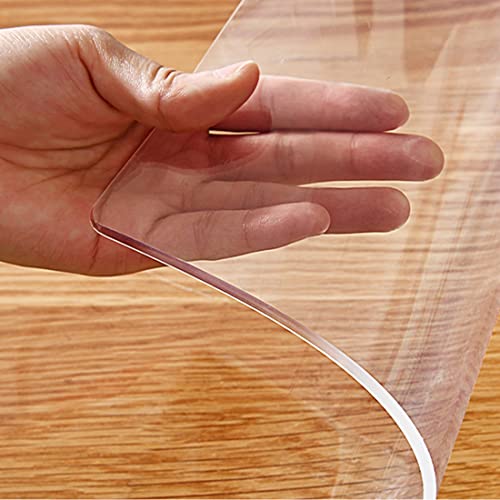
A.Application & Bpa-free Pvc table pad,furniture top protector,clear plastic vinyl table protector, use as table runner or placemats top cover mat. To better protect your table, desk and furniture tops against scratches, scuffs, stains, spillage etc. Great for dining table, wooden table, glass, marble, stainless steel top, office desk, writing desktops, coffee & end table, Tv bench, dresser and chest table, night stand, countertop, office chair mat, hard floor

High quality printed artwork stretched to fit on durable and shrink-resistant canvas.
![HVAC Premium 12" X 18" or 18" X 12" Heavy Duty Walkable Floor Grille - Fixed Blades Air Grille - Brown [Outer Dimensions: 13.75 X 19.75]](https://m.media-amazon.com/images/I/51tqOShwOQL._SL500_.jpg)
Size - Designed for 12" x 18" or 18" x 12" duct openings; actual outer dimensions measure 13.75" x 19.75" for a precise fit.
Avoid the Floating Rug Mistake
How do you keep a rug from looking lost in your bedroom? You master rug anchoring, that’s how. In smart bedroom rug placement, you avoid floating rug syndrome by extending the front two-thirds of the rug under your bed or nightstands. You don’t stop short in the room center, where the rug looks like an isolated island.
For proper anchoring, extend the rug beyond both bed sides, creating a generous, intentional frame. You never place it entirely behind furniture or flush against the wall; that disjointed look throws the whole room off balance.
If your rug cannot reach large furniture, you align edges with nearby pieces or add grounding elements like a bench at the foot of your bed. You anchor deliberately, or you don’t anchor at all.
Recommended Products

Classic Vintage Aesthetic: Featuring timeless traditional persian medallion floral patterns with a sophisticated faded distressed finish, this neutral rug brings warm, vintage charm to your home. Perfectly blending with rustic farmhouse, boho, or modern vintage home decor, it instantly enhances any room — making it an ideal 8x10 area rug for living room, bedroom, dining room, or as an cozy focal point for nursery spaces.

Vintage Charcoal & Cream Aesthetic: Featuring a sophisticated Persian-inspired pattern, this area rug combines a deep charcoal black base with intricate cream and beige floral motifs. The distressed vintage look adds warmth and timeless character to modern farmhouse, boho, or traditional decor, serving as a stunning centerpiece that elevates your interior design.

Stain-Resistant & Machine-Washable: Built for busy households, this neutral beige 8x10 washable area rug tackles spills, pet messes, and deep-seated dirt with ease. Simply wash on a gentle cold-water cycle using mild detergent, then air dry or tumble dry low — no heavy scrubbing needed. Ideal for high-traffic living rooms, dining areas, and pet-loving homes.
Pick Bedroom Rug Materials for Comfort and Durability
Once you’ve anchored your rug with proper placement, you need to pick a material that actually holds up to your daily routine.
Wool: Soft, durable, and naturally stain-resistant. You’ll pay more upfront, but it lasts 15-20 years with proper care.
Synthetics (nylon, polyester): Budget-friendly, easy to clean, and practical for busy households. Replace every 5-8 years.
Natural fibers (jute, sisal): Earthy texture, but skip these for high-traffic spots. They’re scratchy underfoot and stain easily.
For bedroom comfort, prioritize plush textures that feel cozy when you step out of bed. Thick piles insulate sound and retain warmth. Match durability to your traffic level: kids and pets demand tough, washable rug materials, while guest rooms suit softer, luxurious fibers.
Eco-friendly options are trending. Sustainable materials, like organic wool or recycled synthetics, reduce environmental impact without sacrificing performance. Balance aesthetics with practicality. Coordinate your rug’s texture with bedding and curtains for a cohesive look.
Recommended Products

Classic Vintage Style: PureCozy area rug has a trendy faded style and a unique retro pattern, tribal design blend perfectly with your home, suitable for the living room, bedroom, dining room, laundry room, entryway, kids' room, kitchen and office

Pet-friendly and slip-resistant surface: This area rug has a simple color and a luxurious feel. By using our pet-friendly and easy-to-clean carpet, you can enjoy a better time at home. This design adds a soft and luxurious element to your home, and is very suitable for use as a bedroom carpet, perfectly matching family life.

Machine Washable & Stain Resistant: Featuring a premium stain-resistant top surface, these 9x12 area rugs efficiently repel daily liquid spills and accidental stains. Messes can be wiped off in seconds without leaving stubborn marks. Made with premium color-locking fabric, the washable rugs 9x12 maintain vibrant, true-to-original hues even after multiple washes. Simply machine wash with cold water for a quick refresh, keeping the rug bright and flawless for long-term use.
Match Your Rug Color to Bedroom Furniture and Walls
Where do you start when your rug needs to pull the whole room together? You start with your bedroom furniture and walls.
Coordinate Your Palette
Match your rug color to your existing pieces for harmony, not chaos. Light bedroom furniture, like natural oak, pairs with soft neutrals, warm beiges, and pale greys. Darker finishes, such as onyx, need slate grey, deep charcoal, or soft black for a grounded look. Earthy walnut tones complement taupe, deeper creams, and muted greens.
Balance Bold Elements
If your walls are bold or patterned, choose a softer, neutral rug. This prevents visual overload and keeps furniture cohesive. For moody finishes like smoked oak, use darker tonal rugs, or layer lighter neutrals to maintain contrast.
Check the Full Scheme
Step back. Ensure your rug color works with every element, walls included, before you commit.
Recommended Products
STRONG NON-SLIP GRIP: Designed with a powerful double-sided grip, this rug pad effectively secures your carpet, preventing slipping, bunching, or shifting. Whether in high-traffic areas or for daily use, it keeps your carpet flat and stable, providing a safer experience.

[COLOR & PATTERN]: SAFAVIEH's Monaco area rug features a pink-toned field with an ornate medallion, framed by a multicolor-toned floral border; actual color may appear darker or lighter than shown, depending on lighting and screen settings
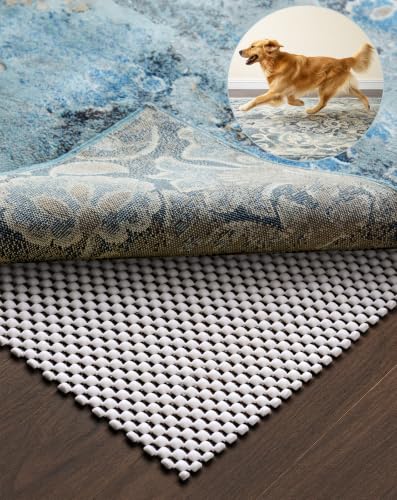
Non-slip Protection: Our pad's signature grip keeps rugs securely in place, preventing bunching and sliding during daily use. It also protects your floors from wear and tear, including damage from high heels, children at play, and more.
Secure Your Rug to Prevent Slips and Bunching
Why risk a stumble at 2 a.m.? You need a rug underlay beneath every bedroom rug, especially along the path between your bed, dresser, and nightstands. This thin grip layer keeps your feet safe during nighttime trips.
For secure placement, extend your rug 18 to 24 inches past each side and the foot of your bed. This gives you stable, plush ground when you rise. Tuck non-slip pads under each corner, and press the edges flat. Avoid folds or bunching, particularly where your bed frame or bench sits atop the rug.
If you use two runners, anchor both pieces firmly. Leave no gaps that could snag your toes.
Check corners monthly. Reapply grip material as needed, especially in high-traffic zones near your bed.
Recommended Products

Designed to withstand everyday wear, this 7' 10 x 10' area rug is the perfect size for living rooms, playrooms, and bedrooms, or anywhere you want to add a splash of modern color.

Designed to withstand everyday wear, this 4' 1 x 6' 1 Oval area rug is the perfect size for living rooms, bedrooms, and entryways, or anywhere you want to introduce a calm, modern aesthetic.

Indoor/outdoor rug adds texture and dimension to your space
Adjust Bedroom Rug Placement for Small or Awkward Rooms
When you’re working with a tight bedroom, you’ll want to use two matching runners beside your bed for balanced access, or place a single rug underneath with 18 to 24 inches of bare floor showing around the edges.
For awkward layouts, center your rug to anchor the bed, nightstands, and any bench, or if the room’s off-center, position the rug to highlight the bed as your focal point instead of centering it on the floor plan. If a full rug feels too heavy, pair a smaller base rug with a runner; this keeps comfort without crowding your space.
Recommended Products

High quality printed artwork stretched to fit on durable and shrink-resistant canvas.
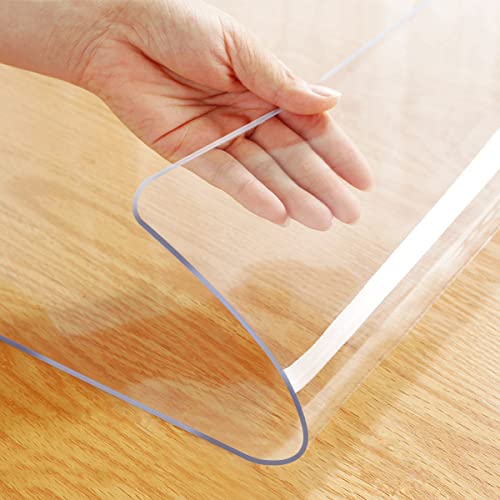
1,High Transparency and Healthy Material,This clear table mat is made of 100% high quality PVC material without BPA, thicken and Clear. Protect your table, desk, tablecloth and furniture tops against scratches, scuffs, stains, spillage while still show the beauty of your table and furniture tops. The table mat can be in direct contact with food, safe and healthy. Perfect for families with kids or pregnant women.The most important point is that it is very durable.

Try Before You Buy with Sample Option – Ordering a sample of carpet squares before a full project allows you to confirm color, texture, and overall quality with confidence
Tight Space Solutions
In tight bedrooms, you don’t need to sacrifice style for square footage. You can maximize every inch with smart rug choices that keep your space feeling open and functional.
Try these three practical approaches:
- Place two runners flanking your bed instead of one large rug. This creates symmetry, improves walking space, and keeps the floor visible.
- Align those runners with your nightstands for a cohesive, orderly look that tricks the eye into seeing more room.
- If you prefer a single rug, extend it 18–24 inches beyond your bed’s sides and foot. This maintains proper proportion without overwhelming the space.
For narrow rooms, keep your rug within the bed’s width. You’ll ground the sleeping area while preserving precious floor space around the perimeter.
Awkward Layout Fixes
Where do you put a rug when your bedroom fights back? You adapt your bedroom rug placement to work with the space, not against it.
For an awkward layout, you skip the oversized rug entirely. Instead, you grab two matching runners and flank both sides of your bed. You choose runners wider than your nightstands, keeping everything centered on the bed itself. This creates balance without overwhelming tight quarters.
You ground the bed first, then adjust for symmetry with surrounding furniture. If your room features off-center windows or angled walls, you deliberately position the rug asymmetrically. This looks intentional, not accidental.
In cramped spaces, you expose more floor around a smaller rug. Your eye reads the open perimeter as extra width, reducing visual clutter.
You solve the puzzle with precision, not compromise.