
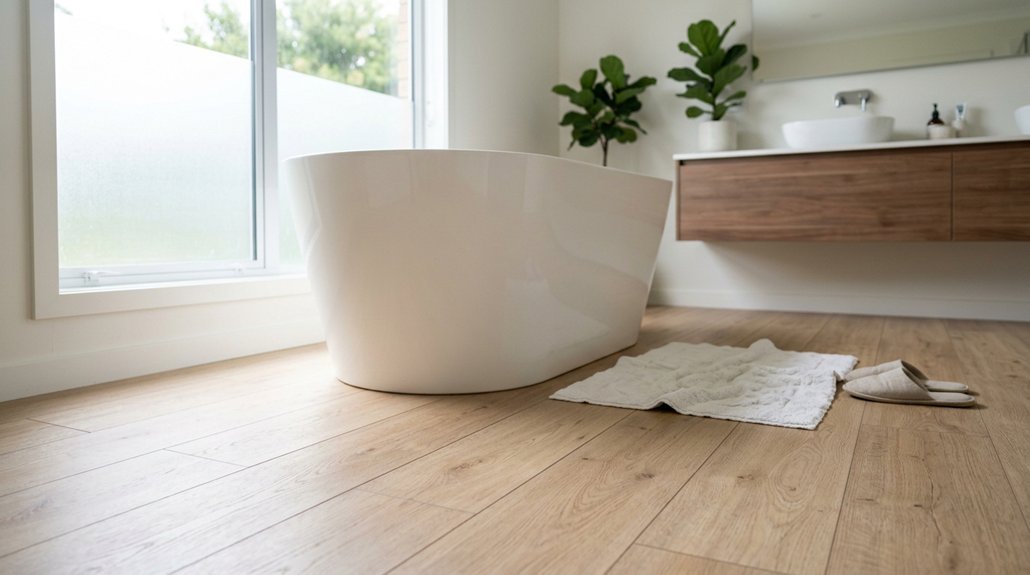


You can put laminate in a bathroom, but only if you pick the right product and follow strict rules. Standard laminate swells and warps when water sits on it, so you need waterproof or highly water-resistant boards rated for wet areas.
Prep takes 48–72 hours of acclimation, plus a moisture barrier underlayment and silicone sealing at every edge. Skip even one step, and you’ll face buckling, mold, or total floor failure within months.
The real question isn’t whether laminate works in bathrooms; it’s whether you’re willing to do the work to make it last.
Is Laminate Flooring Waterproof Enough for Bathrooms?
How waterproof is laminate, really? You’ll find that not all laminates can handle wet spaces, so you must check labels carefully. For any bathroom project, you’re looking for products specifically marketed as waterproof or, at minimum, water-resistant. Quality varies significantly by brand, and you shouldn’t assume basic laminate will suffice.
CALI offers waterproof laminate options, though you’ll want to verify your specific model’s specifications and warranty details before purchasing. Your installation success depends on preparation: ensure your subfloor is flat and completely dry, select a moisture-resistant underlayment, and seal all perimeter edges thoroughly.
Modern laminates require acclimation time and proper perimeter sealing to maximize protection. Even with waterproof labeling, your ongoing maintenance of seals and adherence to installation guidelines directly impacts long-term performance in wet environments.
Recommended Products

✔Wide Application: Aqzfeuy caulking tape provides clean waterproof protection for bathroom and kitchen edges, preventing water from seeping into the joints, widely used for sealing the seams of toilets, bathtubs, showers, sinks, gas stoves, kitchen counters, vanities, tubs, floors, tiles, and walls, vinyl flooring, keeping kitchens and bathrooms clean and tidy for a long time.

Sizes & Package: You will receive 40 sheet Vinyl Flooring, which measuring 11.8x11.8 inch each, with a thickness of 0.05inch / 1.3mm. Cover around 40 square feet with this value package.

PEEL-AND-STICK: No tools, no glue. Just peel&stick, and transform your space in minutes. You can achieve professional wood-looking results even as a first-timer. Reposition during installation for perfect alignment — it's forgiving and foolproof. Many customers complete an entire room floor in just 1-2 hours.
Laminate vs. Vinyl: Which Handles Bathroom Moisture Better?
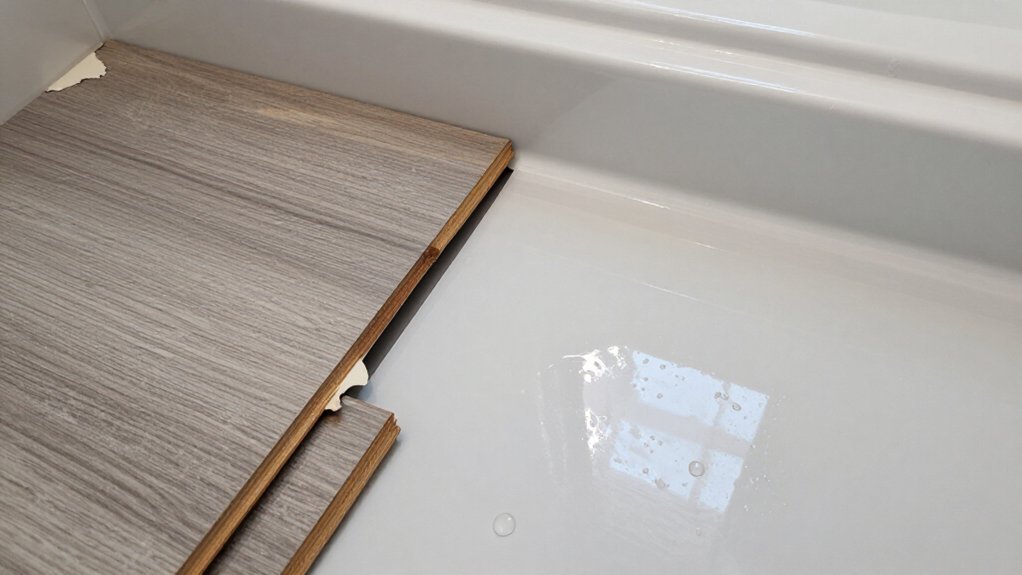
So you’re weighing laminate against vinyl for your bathroom, and moisture is your biggest concern. Vinyl flooring wins this matchup decisively. LVP and LVT are built waterproof from the core out, shrugging off splashes and humidity without special tricks.
Vinyl flooring wins this matchup decisively. LVP and LVT are built waterproof from the core out, shrugging off splashes and humidity without special tricks.
Laminate flooring demands more from you. Some brands, like CALI, market waterproof options, but you must verify claims carefully. Most laminates need moisture-resistant underlayment and perimeter sealing to survive bathroom conditions.
Your decision hinges on three factors:
- Product waterproofing claims, read the specs
- Installation quality, including vapor barriers
- Edge sealing, non-negotiable for laminate
Vinyl flooring offers easier maintenance and stronger moisture protection. Laminate flooring works, but only with careful prep. For worry-free bathrooms, vinyl flooring remains the pragmatic choice.
Recommended Products

For use with wood subfloors only, to reduce vapor flow without trapping moisture


✔ Self sealing adhesive tape for ease of installation
What Waterproof Laminate Features Actually Matter?
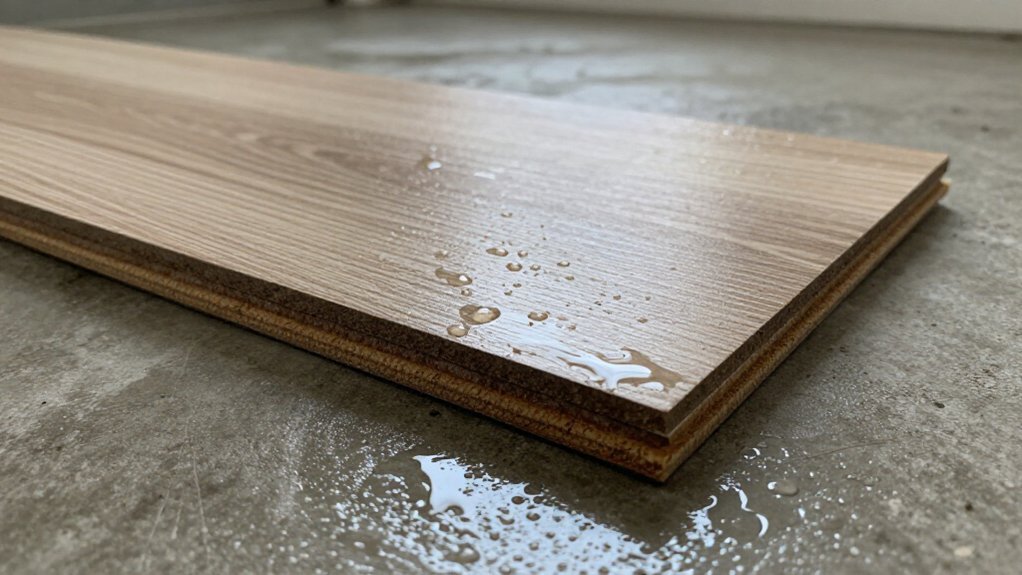
When you’re shopping for bathroom laminate, you’ll want to zero in on two make-or-break features: the core material (the thick inner layer that needs to repel water, not soak it up) and how the planks lock together. A truly waterproof core, like the kind CALI uses, stops moisture from swelling the boards from the inside out. Meanwhile, a tight locking system, measured in millimeters of gap space, blocks water from seeping through the seams. Skip either feature, and you’re gambling with buckled floors, even if the box says “waterproof.”
Recommended Products

Grey brick inspired peel and stick vinyl floor tile

Easy to Clean & Waterproof: Simply wipe clean with a damp cloth or sponge, or use any standard household cleaner to tackle dirt and dust. The floor mat for kitchen repels spills from water, oil, and food, keeping your floors safe and stylish. Perfect for busy kitchens, they seamlessly blend functionality and elegance, ensuring quick cleanups while enhancing your space

EXTRA-LARGE COVERAGE FOR A CLEANER LITTER AREA Extra-large coverage creates a wider clean zone around the litter box, helping reduce litter tracking and keep floors cleaner before scattered litter spreads through your home. Ideal for multi-cat households or high-traffic litter areas.
Core Waterproof Materials
Why does waterproof laminate actually resist moisture? You need to look past marketing claims and examine what actually protects your floor. A truly waterproof core prevents swelling, warping, and mold growth when humidity spikes or spills occur.
You deserve flooring that won’t betray you when accidents happen. Consider these emotional stakes:
- You walk into your bathroom and feel secure, not anxious about every drop of water
- You protect your investment from the heartbreak of buckled, ruined planks
- You create a sanctuary where steamy showers don’t trigger hidden decay
- You sleep soundly knowing your subfloor stays dry beneath a reliable moisture barrier
Don’t settle for water-resistant when waterproof exists. Check product specifications rigorously, demand proven performance ratings, and verify the core material handles wet environments. Your bathroom demands genuine protection, not hopeful guesses.
Locking System Design
How does water actually get past your laminate’s defenses? It sneaks through the seams, that’s how. A tight locking system blocks that path, keeping moisture from reaching the core.
What to look for in a waterproof locking system:
- Minimal gap design: The tighter the lock, the less seepage you get at edges and perimeters.
- Perimeter sealing: You must seal edges around fixtures and walls, even with waterproof laminate.
- Proper underlayment: A moisture-resistant layer adds backup protection.
Not all laminates are waterproof, so check labels carefully. Products like CALI Shorebreak or Mavericks specify waterproof construction, and their guides demand flat, dry subfloors plus thorough edge sealing.
Skip those steps, and you have risk. Follow them, and your bathroom install holds up.
When to Choose Vinyl or Tile Instead of Laminate
You should choose vinyl or tile over laminate when your bathroom faces high moisture risk levels, such as daily steam from long showers or poor ventilation that traps humidity for hours. Vinyl planks (LVP/LVT) offer consistent, built-in waterproofing without demanding perimeter sealing or special acclimation timelines. Tile provides decades of proven performance in wet conditions.
If you’re weighing these alternatives, you’ll want to compare how each material handles your specific moisture exposure, installation constraints, and long-term maintenance expectations.
Recommended Products

3in1 Vapor Barrier Underlayment | 500 sq. ft bundle (5 rolls each 100 sqft)
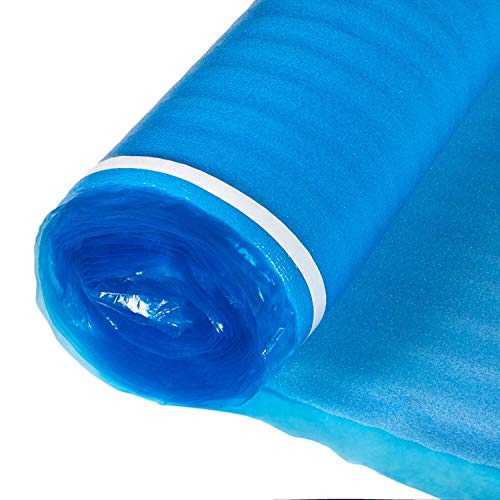

Large Area Coverage: This floor underlayment covers 100 sq. ft / 9.3 ㎡ per roll (366.14 x 39.37 x 0.12inch / 9300 x 1000 x 3mm). Ideal for large installations, it reduces construction time and material waste for quick, efficient flooring completion
Moisture Risk Levels
Where exactly does laminate flooring stand when water starts flying in your bathroom? You face real moisture risk with standard laminate, since water sneaks through seams and edges fast.
You can cut that risk sharply with waterproof laminate options, tight locking systems, and solid moisture barriers. Prep matters: lay a flat, clean subfloor, add moisture-resistant underlayment, and seal every perimeter gap thoroughly. CALI waterproof laminate exists, but even “waterproof” labels fail you when moisture creeps under edges or around fixtures.
Consider your bathroom’s daily reality:
- Steam from hot showers attacks edges silently
- Splashes pool where you step out daily
- Drips linger near toilets and vanities
- Trapped moisture warps boards from below
Many pros push you toward vinyl (LVP/LVT) for heavy moisture zones. You decide based on your bathroom’s actual water exposure, not product promises alone.
Alternative Material Benefits
Why gamble with water damage when proven alternatives exist? Luxury vinyl plank and tile deliver superior water resistance and easier moisture management than laminate can reliably provide.
When Vinyl Wins:
- Waterproof construction handles splashes, leaks, and humidity without special sealing
- Wood-look and tile-look styles mimic laminate aesthetics minus the risk
- Simpler installation: no perimeter sealing or moisture barriers required beyond standard underlayment
When Tile Wins:
- Ceramic and porcelain offer decades of proven bathroom performance
- Grout maintenance beats replacing swollen laminate boards
The Bottom Line:
You should choose vinyl or tile for bathrooms unless you find laminate explicitly rated for full bathroom use; even then, you’ll need tight locking systems, moisture barriers, and careful perimeter sealing.
Most designers steer you toward waterproof vinyl or ceramic tile; it’s the pragmatic path that minimizes your long-term risk.
How to Prep Your Subfloor for Bathroom Laminate
How exactly do you get a bathroom subfloor ready for laminate? You start with thorough subfloor prep, because laminate flooring demands a surface that’s flat, clean, level, and bone-dry. Skip this step, and you’re inviting warping, mold, and costly repairs.
Here’s what you absolutely must do:
- Scrape away every bit of debris, adhesive, and old sealant that could sabotage your installation
- Check for moisture with a reliable meter, waiting until readings stabilize below manufacturer limits
- Sand down high spots and fill low areas with leveling compound, targeting variance under 3/16 inch per 10 feet
- Verify your work with a long straightedge, correcting flaws now rather than discovering them mid-install
Complete this foundation properly, and you’ve set the stage for a bathroom floor that performs.
Recommended Products

100% WATERPROOF SILICONE SEALANT: Forms a continuous waterproof barrier around flooring perimeters, expansion gaps, transitions, molding, and trim

100% WATERPROOF SILICONE SEALANT: Forms a continuous waterproof barrier around flooring perimeters, expansion gaps, transitions, molding, and trim

100% WATERPROOF SILICONE SEALANT: Forms a continuous waterproof barrier around flooring perimeters, expansion gaps, transitions, molding, and trim
What Underlayment Works Best Under Bathroom Laminate?
What separates a bathroom laminate floor that lasts from one that fails? You guessed it: the underlayment. You need moisture resistance at every layer, and that starts here.
Choose Your Underlayment Wisely
You should select a moisture-resistant underlayment designed specifically for bathrooms, such as CALI Complete underlayment. This blocks moisture from reaching your subfloor, which you’ve already prepped (flat, clean, level, and dry). You want a vapor barrier underlayment too; it further reduces moisture transfer between subfloor and laminate.
Key Features to Demand
- Built-in moisture protection
- Compatibility with waterproof or water-resistant laminate products
- Proper perimeter sealing with silicone around edges and near fixtures
You can’t skip that silicone step. It prevents water ingress under your laminate, where damage starts quietly and spreads fast. Match your underlayment to your flooring for best results.
Recommended Products

[Ultra-realistic Surface Texture Restoration]: Realistic texture and a durable surface with excellent wear resistance; the surface won't scratch easily, doesn't retain stains, and is easy to clean.

【Sizes & Package】 You will receive 40 sheet Vinyl Flooring, which measuring 11.8x11.8 inch each, with a thickness of 0.05inch / 1.3mm. Cover around 40 square feet with this value package.

Premium Quality - Art3d Peel and Stick Vinyl Flooring Tiles are crafted with the high quality vinyl, ensuring durability and longevity. Each pack contains 30 tiles, each measuring 12x12 inches, providing a total coverage of 30 square feet - ideal for revitalizing any space
Install Bathroom Laminate Without Warping: Step-by-Step
Where exactly should you start when installing bathroom laminate that won’t buckle or twist? You begin with the subfloor. Check that it’s flat, clean, level, and completely dry. Any moisture trapped below invites disaster.
Start with the subfloor: flat, clean, level, and bone-dry. Moisture below is your enemy.
Next, you lay a proper moisture barrier across the entire bathroom floor. Water exposure hits hardest at edges and near fixtures, so don’t cut corners here.
Choose laminate that’s marketed as waterproof or highly water resistant. Follow the manufacturer’s guide for bathroom installation exactly.
Before you click a single plank, acclimate the laminate in the room. Most brands need 48 to 72 hours. This reduces expansion and contraction later.
Feel the relief of a dry, stable subfloor beneath your feet. Trust the security of a sealed moisture barrier protecting your investment. Rest easy knowing you’ve chosen water resistant materials built for this space. Experience confidence when you follow proven steps, not guesswork.
Seal all perimeter edges with silicone. You block moisture intrusion where it matters most.
Recommended Products

100 sq. ft. Coverage – Ideal for single-room installations and small renovation projects.

SEALS VAPOR BARRIER SEAMS: Heavy-duty 12 mil polyethylene seam tape bonds crawl space vapor barrier overlaps, seams, and penetrations into one continuous moisture barrier for full encapsulation in crawl spaces and basements.

Seal Edges and Control Humidity to Protect Your Floor
Why seal the edges if the laminate itself resists water? Moisture sneaks underneath at perimeter gaps, warping your subfloor and ruining the installation. You must seal all edges thoroughly with silicone or a compatible sealant, especially near tubs, toilets, and walls. Even waterproof laminate benefits from this perimeter protection.
Before you start, lay a moisture-resistant underlayment over a flat, clean, level, dry subfloor. Choose products marketed as waterproof or water-resistant, and verify the locking system blocks moisture intrusion at seams.
After installation, control humidity daily. Dry spills immediately, mop regularly, and run your exhaust fan during showers. This routine protects your sealant and underlayment from premature failure. Skip these steps, and you’ll face costly repairs within months.
Recommended Products

➤ SIZE & MATERIAL: Each black floor tile measures 12"x12" and 0.057" thick. 36 tiles per box, totally can cover 36 square feet. The sticky floor tiles are made of superior vinyl, wear resistant and nonflammable, safe for your family.

Stylish - Authentic wood looking and grain texture, can meet the individual needs of different decorative styles.

Sleek & Modern Black Finish:Featuring a deep matte black surface with subtle wood-like texture, this flooring adds a contemporary, elegant touch to any space—perfect for modern, industrial, or minimalist home decor styles.