
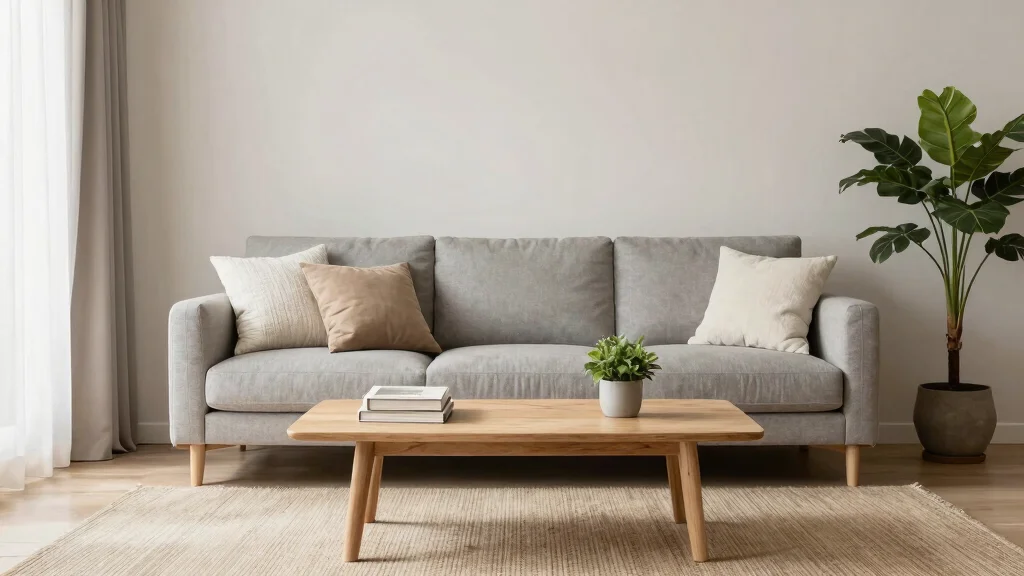


Creating a cozy and inviting living room can feel overwhelming. With so many styles and trends, it’s easy to get lost in all the options. But don’t worry! I’ve put this post together to simplify the process of living room interior design. Whether you’re moving into a new space or just want to refresh your existing room, this guide is here to help.
If you’re someone who appreciates minimalism and modern aesthetics, this post is for you. You likely value simplicity, functionality, and a touch of elegance in your decor. You want your living area to reflect your style while remaining comfortable and inviting for family and friends. With this in mind, I’ve compiled 13 actionable ideas that are straightforward, practical, and perfect for creating the polished home you’ve been dreaming of.
Get ready to explore ways to embrace neutral color schemes, find simple furniture arrangements, and incorporate cozy accessories. Each idea is designed to help you create a space that feels both stylish and welcoming. So let’s dive into the world of modern living room ideas and minimalist decor tips that will transform your space into a haven of comfort and style.
Key Takeaways
– Embrace Neutral Color Schemes: Neutral tones create a calming atmosphere and provide a versatile backdrop for decor. They allow you to easily switch up accents without a complete overhaul.
– The Power of Simple Furniture Arrangements: A well-planned layout enhances flow and functionality. Consider furniture that encourages conversation and fits your lifestyle needs.
– Layering Textiles for Comfort: Incorporate different textures through throws, pillows, and rugs. This layering adds warmth and visual interest to your living room.
– Lighting Makes All the Difference: Good lighting can transform your space. Use a mix of ambient, task, and accent lighting to create a cozy and inviting atmosphere.
– Mindful Seasonal Decor Updates: Refresh your living room with simple seasonal touches. Swap out accessories like cushions or artwork to keep the space feeling fresh and current without a major investment.
Recommended Products

【NATURAL COTTON ROPE DESIGN | SOFT & DURABLE】 Made with natural cotton rope, this woven storage basket features a soft texture without plastic materials or harsh chemicals. The gentle rope construction is safe for family use, while the durable handwoven design helps the basket maintain its structure and provides long-lasting everyday storage.
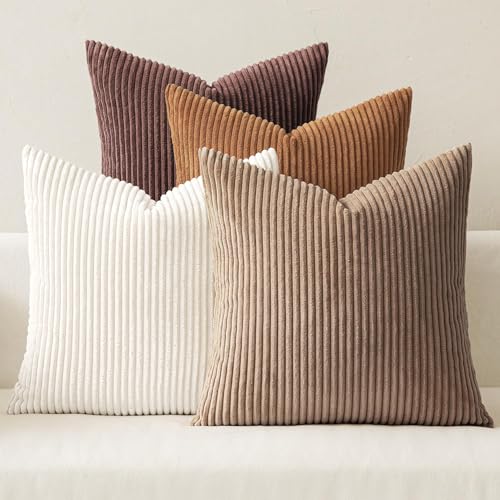
Luxurious Boho Texture: Crafted from super-soft, premium corduroy, these decorative throw pillow covers are a must-have for boho decor and bedroom decor, adding instant character with an elegant stripe pattern.

Soft & Breathable Plush Fleece Blanket: Crafted from ultra-soft premium flannel fleece, this beige soft lightweight plush fuzzy blanket provides cozy warmth without overheating, making it perfect for year-round use
1. Embrace Neutral Color Schemes
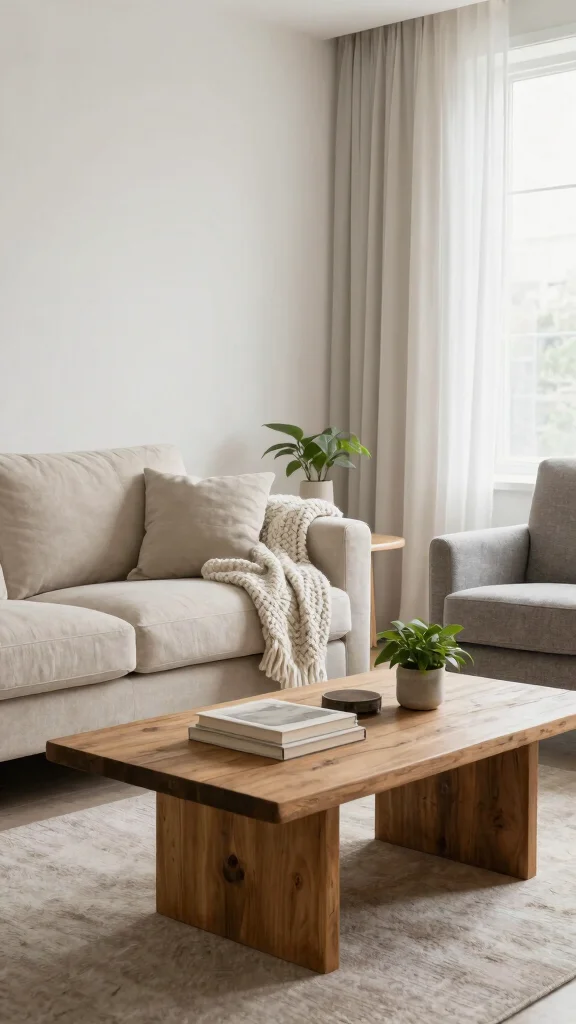
Neutral color schemes create a serene atmosphere, making a living room feel both sophisticated and inviting. Soft whites, muted grays, and warm beiges form a harmonious backdrop, allowing your furniture and decor to stand out beautifully. For example, pairing a light beige sofa with crisp white walls and a gray accent chair introduces depth while maintaining a clean look.
To enhance this palette, incorporate wooden elements like a rustic coffee table or sleek shelving. Layering different neutral tones and textures will prevent the space from appearing flat. Combine smooth leather with a chunky knit throw or soft linen cushions for visual interest and comfort.
Consider these tips for implementing neutrals:
– Pair a beige sofa with white walls for a fresh look.
– Use a gray accent chair to add depth and contrast.
– Layer textures like leather and knits for added interest.
Utilizing a neutral palette simplifies your design process while creating a timeless and stylish living room that feels effortlessly polished.
Recommended Products

Minimalist Chic Style: Our nightstands feature unique waveform panels on the doors, adding simple elegance to your bedroom. The chic design suits different bedroom styles such as modern, bohemian or mid-century

INSTALLATION REQUIRED FOR LAMPSHADE: To minimize unnecessary packaging waste and to save transport fees, we have meticulously sought out the most efficient packing method. This enables us to give customers more cost-effective products, allowing you to buy high-quality items at a more affordable price. The ceramic table lamp comes with all the necessary installation accessories and a manual in the package. Following the instructions, you can set up the farmhouse table lamp easily. If you need any help, 24/7 customer service is here for you.

MODERN MINIMALIST DUO DESIGN: This side table offers a clean, compact form that fits seamlessly into living rooms, bedrooms, or small apartments as a set of 2 end tables
2. The Power of Simple Furniture Arrangements
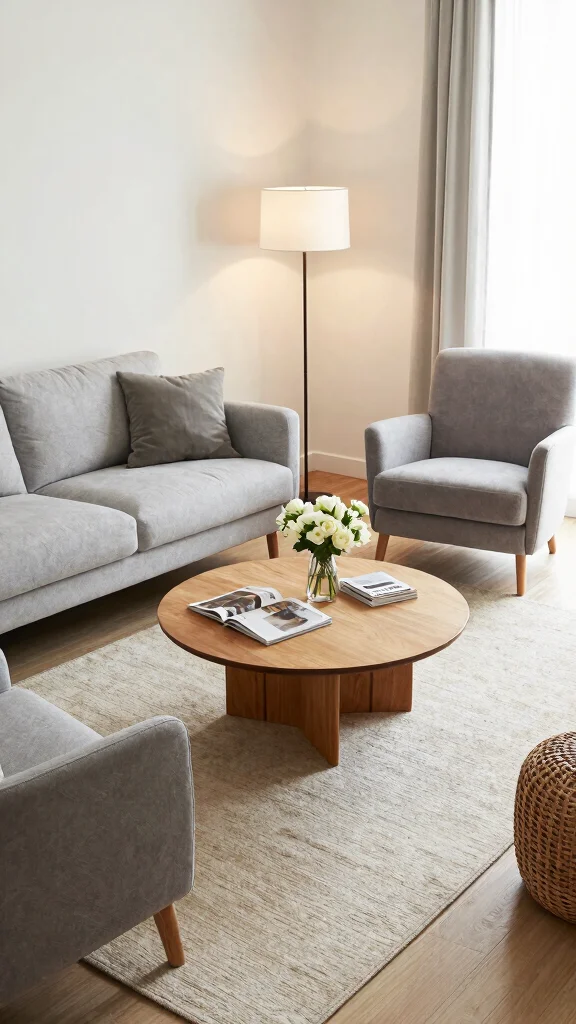
The arrangement of your furniture significantly influences how your living room functions and feels. Start by considering how you use the space—whether you enjoy entertaining or prefer a cozy retreat. This insight will guide your layout choices.
Create intimacy by grouping seating together, like a sofa with two armchairs, fostering conversation and connection. For larger areas, add a side chair or floor cushions for additional seating without overcrowding.
Keep pathways clear, leaving about 18 inches between pieces to facilitate movement. Position larger items against the wall to maximize space while using smaller tables to create inviting nooks.
Keep these ideas in mind:
– Mix seating types for a dynamic arrangement.
– Use area rugs to define different zones.
– Experiment with layouts until it feels just right.
Mastering furniture arrangement enhances your living room’s style and functionality, making it a welcoming haven for all.
Recommended Products

Cover Only: Boho Decorative Square Throw Pillow Cover 20x20

Cover Only: Boho Decorative Square Throw Pillow Cover 22x22

Size: 2 pcs of 20x20 /(50x50cm) inch checkered weaving pillow covers. No Cushion Insert.
3. Layering Textiles for Comfort
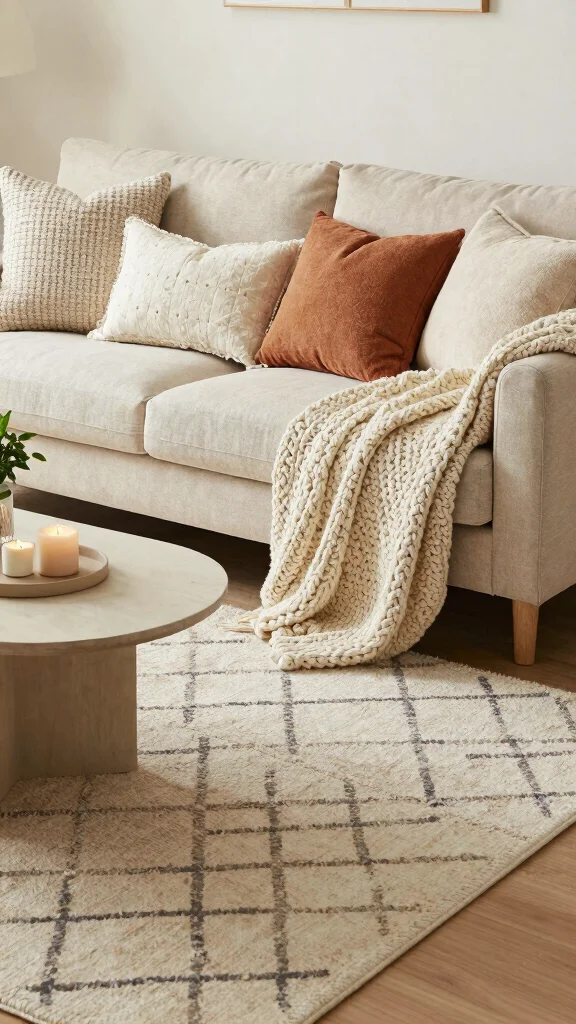
Layering textiles is a delightful way to transform a minimalist living room into a cozy retreat. This technique adds warmth, texture, and depth, essential for creating a comfortable space. Begin with soft, neutral materials for larger items like sofas and curtains, then introduce variety with pillows, throws, and rugs.
Mixing textures is key—pair a smooth leather sofa with soft linen cushions and a chunky knit throw for a tactile experience. An oversized area rug can anchor the space, providing a welcoming feel.
Don’t hesitate to incorporate subtle patterns to enhance visual intrigue. Opt for a geometric print that complements your color scheme without overwhelming it.
Here are some pro tips:
– Use varying fabric weights for interesting layers.
– Keep a consistent color scheme for cohesion.
– Rotate throws and pillows seasonally for a fresh update.
Thoughtfully layering textiles creates an inviting atmosphere, encouraging you to relax and unwind in your living room.
Recommended Products

STYLISH SPACE-SAVING LIGHTING FIXTURE: This versatile Mid-Century Modern arc floor lamp is ideal for ambient, task, or accent lighting

Upgraded Modern Design:This 56-inch smart floor lamp features a taller lamp body to illuminate larger areas and a 7.1-inch wide base for greater stability and a more dynamic lighting effect. Customize the floor lamp with a range of vibrant colors and gradient effects to create a refined and personalized ambiance for any space.

Luxe Crystal-Like Ambiance: The faceted diamond-cut green glass shades refract light into a sparkling, nature-inspired glow, instantly elevating your space with a refreshing, sophisticated mood. More than just a lamp, it’s a statement accent light ideal for bedrooms, living rooms, or home offices.
4. Minimalist Art Choices
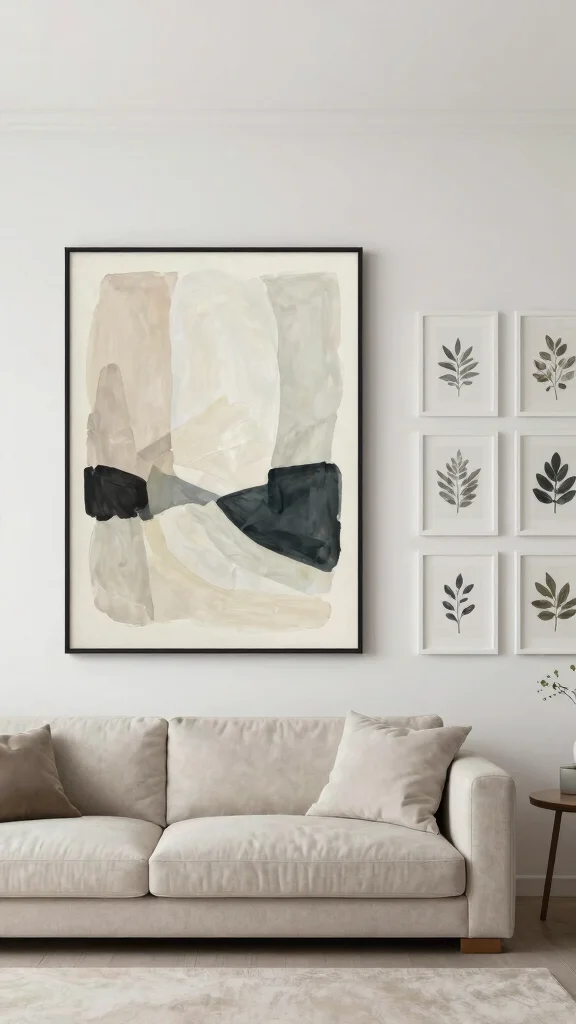
Art can serve as a striking focal point in your minimalist living room without overcrowding the space. Selecting pieces that resonate with you while maintaining simplicity is crucial. Large artwork can command attention, while smaller collections lend a curated feel to your decor.
Monochrome or abstract artwork beautifully complements minimalist styles, adding interest without distraction. Consider creating a gallery wall with a mix of framed prints and canvas pieces, using consistent frames for a cohesive look.
Integrate natural elements like botanical prints or landscapes to foster a connection with nature. Ensure art is hung at eye level to create an inviting atmosphere.
Helpful tips include:
– Invest in quality frames that elevate the art.
– Allow for negative space to maintain minimalism.
– Rotate artwork periodically for a fresh ambiance.
With mindful art choices, your walls can express personality while adhering to a clean and minimalist aesthetic.
Recommended Products


The How Lucky Are We Canvas Art features the phrase how lucky are we arranged vertically at the center in natural handwritten black script, meaning "We are so blessed". The outer ornate gold frame has detailed scroll carvings with antique black trim details. The plain muted color palette builds a relaxing, grateful and warm domestic atmosphere.

【Vintage Neutral Wildflower Wall Art Set of 3】This boho botanical wall decor set includes 3 beautifully designed wildflower canvas prints featuring delicate floral illustrations, vintage striped backgrounds, and soft neutral tones. The elegant botanical artwork creates a calming atmosphere while bringing timeless cottagecore charm to your bedroom, living room, or farmhouse space.
5. Functional and Chic Storage Solutions
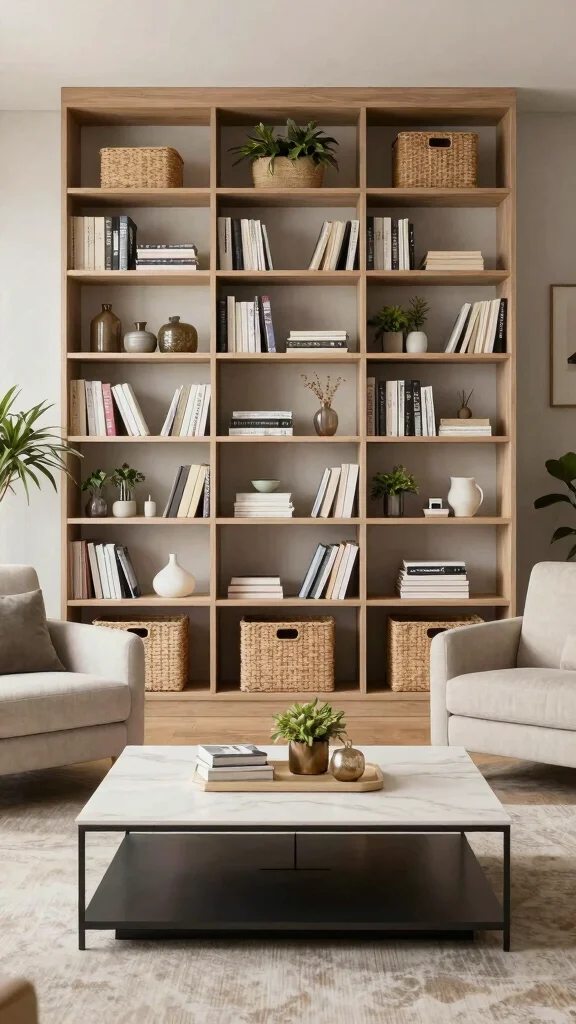
Storage can be both stylish and practical in your living room. Incorporating chic solutions helps maintain a clean look while keeping clutter at bay. Seek out furniture with dual purposes, like coffee tables with hidden compartments or ottomans that serve as both seating and storage.
Open shelving offers a beautiful way to showcase decorative items while providing storage solutions. Use baskets to organize smaller items and avoid visual clutter. Curate your displayed items carefully to ensure shelves remain tidy and appealing.
Utilizing vertical space is essential in a minimalist setting. Tall bookshelves or wall-mounted shelves draw the eye upward, enhancing the perception of space.
For effective storage:
– Choose furniture that complements your style and offers storage.
– Regularly declutter to maintain organization.
– Keep frequently used items accessible and store the rest out of sight.
By embracing functional and chic storage solutions, you can create a stylish living room where everything has its place.
Recommended Products

QUALITY MATERIAL: The pillow cover is composed of a soft and comfy corduroy which is a kind of polyester fabric, features a cute and elegant boho stripe design. Our pillow covers are of good workmanship, they are tightly sewn without loose threads.
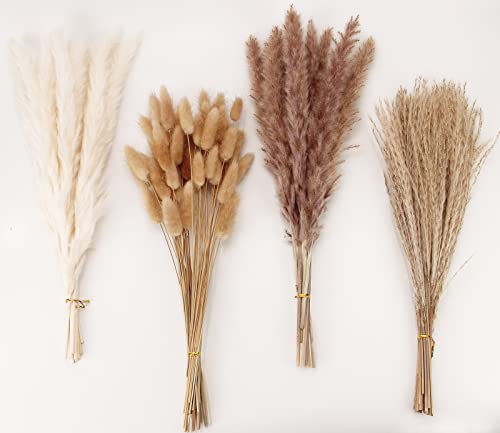
MORE THAN ONE KIND OF POMPOUS GRASS BOUQUET: carefully selected natural dried pampas grass decor, try to avoid deformation and breakage of dried pampas grass, 100 pieces of pampass grass contain 50 small pampas grass, 20 reed grass, 15 white pompas, 15 brown pompass grass branches(pampas grass vase not included) fill your vase, you can match it with different dried pompas floral bouquets according to your preference

PREMIUM FABRIC CONSTRUCTION: This flannel fleece throw blanket utilizes 100% premium microfiber polyester that is super soft, fluffy, anti-pilling, and lightweight yet could keep warm on chilly days.
6. Lighting Makes All the Difference
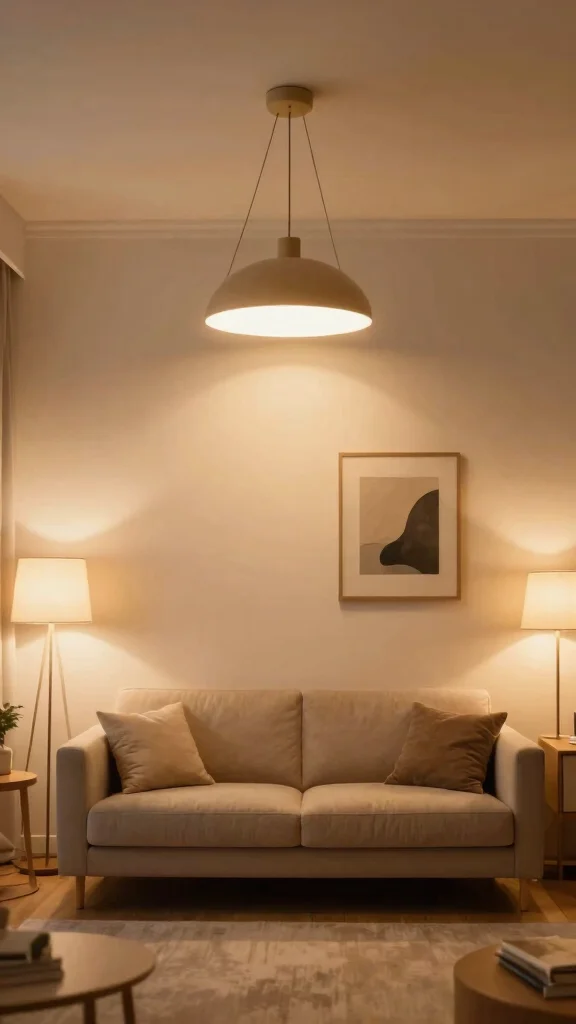
Lighting is a vital element in any living room design, influencing mood and enhancing decor. Aim to blend different light sources, such as ambient, task, and accent lighting, to create a layered effect.
Start with overhead lighting; consider a sleek pendant or modern chandelier for a striking focal point. Add task lighting with table lamps or floor lamps to illuminate seating areas, perfect for reading or socializing.
Accent lighting can highlight artwork or architectural features, providing an extra dimension to your space. Dimmable options allow for mood adjustments throughout the day.
Practical lighting tips include:
– Use warm bulbs for a cozy ambiance.
– Choose stylish lamp shades that match your decor.
– Position lamps carefully to avoid harsh shadows.
Thoughtfully designed lighting transforms your living room into a warm and inviting space, enhancing its minimalist charm.
Recommended Products

[MORDEN SET] 1x 3-SEATER SOFA + 2x SWIVEL CHAIRS-- Includes 1x Sculptural 3-Seater Sofa and 2x 360° Swivel Chairs. This 3-piece designer ensemble creates a complete, gallery-inspired conversation circle for larger living rooms or hosting.

Product Dimensions: 18.90"L x 16.73"W x 31.10"H; Seat Dimensions: 15.75"SD x 16.73"W x 17.32"H; Backrest Height: 14.57"H; Weight: 9.26 LBS.

How To Choose Minimalist Living Room Decor
When creating a minimalistic living room, every piece matters. You want to select decor that promotes simplicity and elegance. Here are some key factors to consider as you refine your living room interior design.
1. Size
Understanding the size of your living room helps you choose appropriately scaled furniture and decor. For smaller spaces, opt for compact pieces that don’t overwhelm. In larger rooms, you can consider bigger furniture items while ensuring they maintain an airy vibe. Always measure your space before purchasing to avoid clutter!
2. Material
Choose materials that enhance the minimalist aesthetic. Natural elements like wood, metal, and linen work beautifully in minimalist designs. These materials not only look good but also add warmth and texture. Avoid overly synthetic materials as they can disrupt the clean lines of minimalism.
3. Color Palette
Stick to a neutral color scheme with soft whites, grays, or earthy tones. These colors create a calming atmosphere and allow you to incorporate accent pieces without overwhelming the space. Consider adding one or two pop colors through accessories, like cushions or art, to keep the room interesting without cluttering it.
4. Functionality
Every item in a minimalist living room should serve a purpose. Choose furniture that combines style and function, like a coffee table with storage or a stylish shelf that displays decor and books. This will help you maintain a clean look while keeping essential items within reach.
5. Lighting
Good lighting is crucial in minimalist design. Natural light should be your priority, so keep window treatments light and airy. For artificial lighting, consider sleek, modern fixtures that blend with the decor. Dimmer switches can help adjust the mood, making the space cozy for relaxation.
6. Personal Touches
While minimalism emphasizes simplicity, you can still add personal touches. Select a few meaningful decor items, like framed family photos or travel souvenirs. These pieces should blend harmoniously with the overall design, promoting a sense of warmth without creating clutter.
Pro Tip: Keep a checklist of the decor items you want as you shop. This will help you stay focused and avoid buying unnecessary pieces that could clutter your minimalist space.
By focusing on size, material, color palette, functionality, lighting, and personal touches, you’ll create a polished, minimalist living room that feels both inviting and stylish. Enjoy the process of transforming your space into a serene retreat!
Recommended Products

Cover Only: Boho Decorative Square Throw Pillow Cover 20x20

Soft & Plush: The fluffy pillow covers are super soft on both sides. The front of the decorative pillow covers is cozy faux rabbit fur, and velvet on the back, smooth and soft to touch

[Vintage Floral Print]: Features a detailed botanical print with colorful flowers, leafy vines and decorative side borders in muted red, blue, green, gold and cream tones.
7. Incorporate Natural Elements
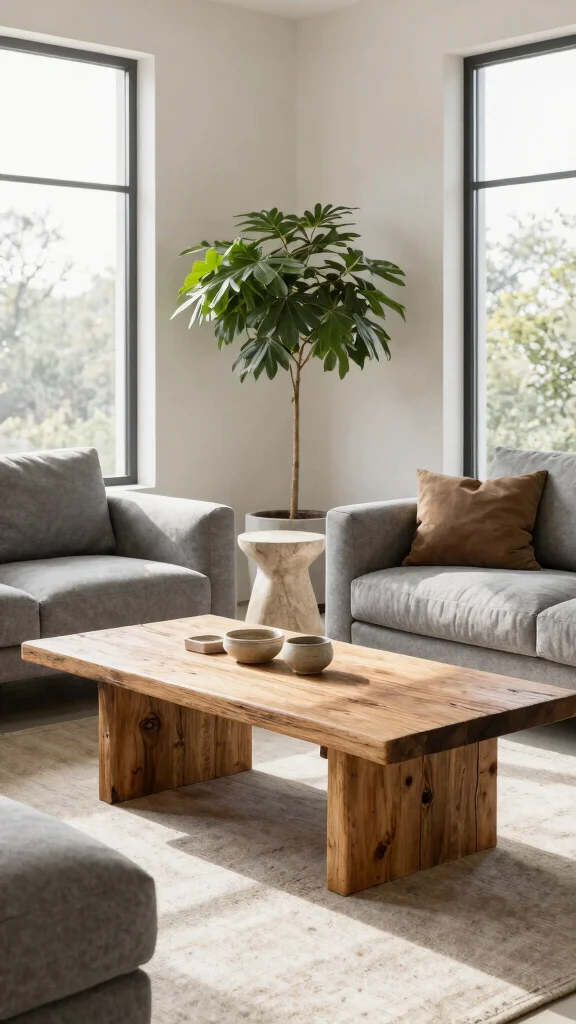
Bringing the outdoors inside can significantly enhance your living room’s aesthetic while promoting tranquility. Incorporating natural materials like wood, stone, and plants creates a soothing environment that aligns beautifully with minimalist design.
Opt for furniture crafted from natural woods or stone finishes, like a reclaimed wood coffee table or an accent chair made of natural materials. Adding plants not only purifies the air but also infuses your decor with color and life.
Consider placing a large potted plant in a corner or a series of smaller plants on shelves for added interest. Low-maintenance options like succulents or snake plants thrive in various lighting conditions.
Best practices for incorporating nature:
– Choose organic shapes for decor items.
– Layer different heights of plants for visual appeal.
– Select simple plant pots that complement your decor.
Integrating natural elements brings a peaceful vibe to your living room, creating a calming oasis in your home.
Recommended Products

STYLISH SPACE-SAVING LIGHTING FIXTURE: This versatile Mid-Century Modern arc floor lamp is ideal for ambient, task, or accent lighting

Cordless & Rechargeable Design: Built-in 4000mAh rechargeable battery allows for cord-free use anywhere. Perfect for spaces without outlets, ideal for indoor and outdoor settings. Comes with a USB Type-C cable (adapter not included, recommend 5V/2A).

【Modern Brushed Nickel Design】Crafted with a sleek brushed nickel finish and two transparent glass shades, this bathroom vanity light brings a refined modern touch to any interior. Perfect for bathrooms, bedrooms, or hallways, it enhances your space with subtle elegance and style
8. Choose Multi-Functional Furniture
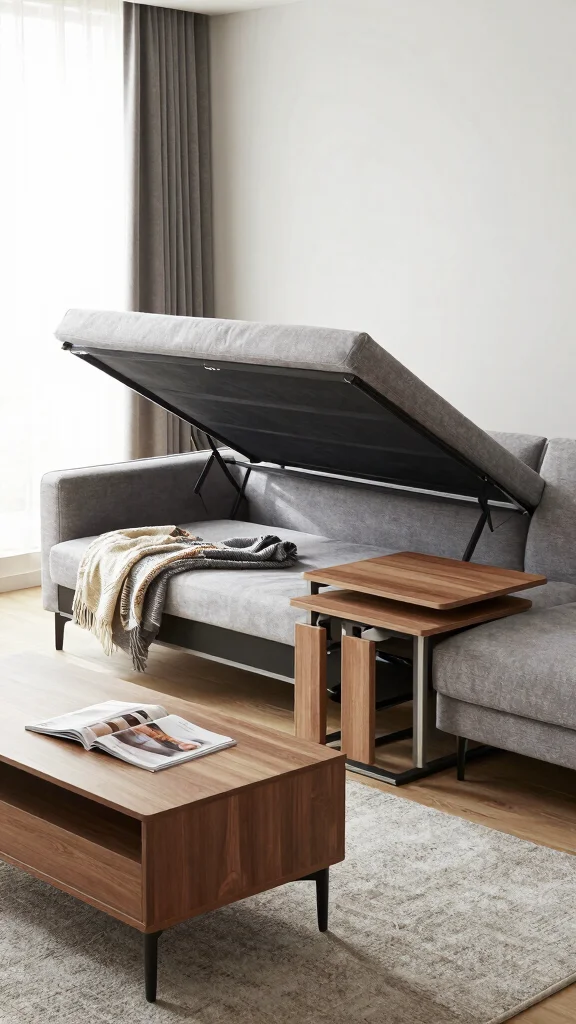
In smaller or minimalist living spaces, multi-functional furniture is a true asset. These versatile pieces not only save space but also enhance the overall functionality of your room.
Consider a sofa bed that provides comfortable seating by day and a guest bed by night. Coffee tables with storage are perfect for stashing blankets or games, keeping your living area organized. Nesting tables can be used for extra surface area when needed and tucked away afterward.
Look for ottomans that serve multiple purposes, such as seating, footrests, or coffee tables. Selecting pieces that fit your aesthetic while offering practicality is key.
When selecting multi-functional items:
– Ensure comfort is not compromised for functionality.
– Stick to a cohesive design style for a polished look.
– Regularly assess your furniture’s usage to maximize space.
Choosing multi-functional furniture not only maximizes your living space but also enhances the style of your minimalist room, making it a smart solution for modern living.
Fun fact: In small living rooms, multi-functional furniture can free up to 40% more floor space without compromising style. For smarter living room interior design, a sofa bed, coffee tables with storage, and nesting tables keep daily living practical and guests comfortable.
Recommended Products
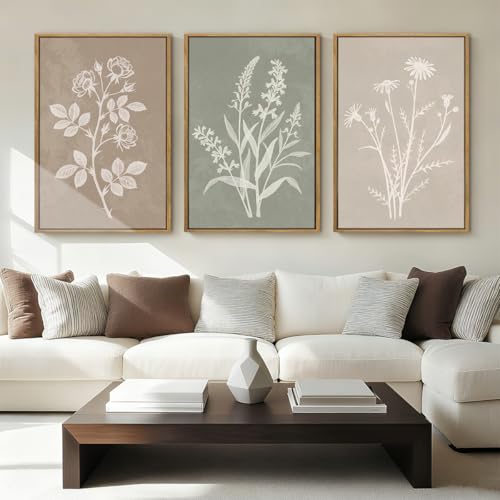
【Framed Boho Botanical Wall Art】This boho botanical wall art consists of three distinct floral patterns. The overall style is neutral and simple, and its retro color...
9. Curate a Personal Touch
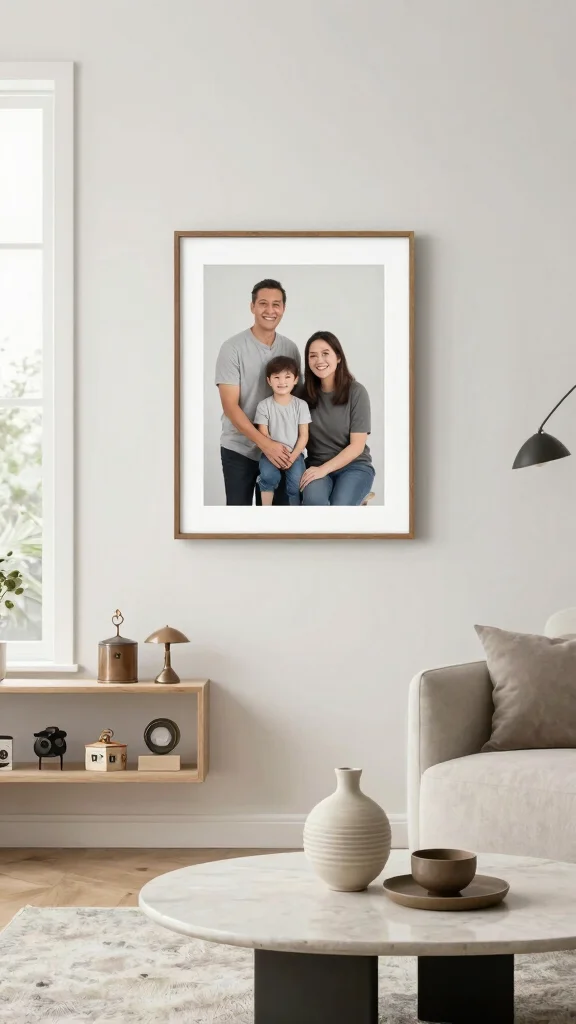
Adding personal touches to a minimalist design makes your living room feel like home. Curate meaningful items, photographs, or travel souvenirs to give your space character without overwhelming it.
Instead of displaying everything, select standout pieces that resonate with you. A framed family photo or a unique artifact can spark conversation while fitting neatly into your decor. Choose items reflecting your personality while maintaining a cohesive look.
Incorporate personal art or crafts you’ve created, as handcrafted items add authenticity and uniqueness to your space.
Helpful hints include:
– Avoid cluttering surfaces with too many personal items.
– Balance personal touches with the overall minimalist aesthetic.
– Refresh your curated pieces periodically to keep the space lively.
By carefully curating personal items, you bring warmth and individuality to your minimalist living room, transforming it into a space that truly feels like you.
10. Keep Surfaces Clear
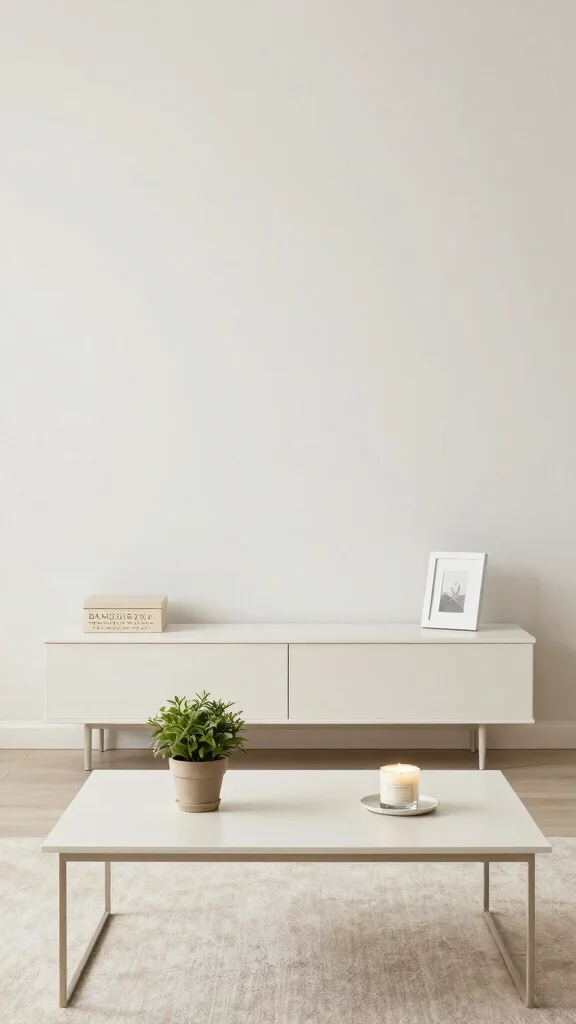
Maintaining clutter-free surfaces is essential for achieving a polished look in your living room. A multitude of items on tables and shelves can create chaos, opposing the serene vibe that minimalism promotes.
Establish a routine to regularly evaluate which items can be put away or removed. Use decorative boxes or baskets to store smaller items that tend to scatter. Keep essential items accessible while limiting decorative pieces to one or two per surface for a clean aesthetic.
Consider a “one in, one out” policy for new items—if you bring something in, let go of something old, ensuring your space remains organized.
Pro tips for clear surfaces:
– Regularly declutter every few weeks to maintain order.
– Use trays to corral smaller items and enhance organization.
– Keep a simple decor item like a candle or plant to add character without overwhelming.
By keeping surfaces clear, your living room stays inviting and stylish, embodying the essence of minimalist decor.
11. Focus on Architectural Details
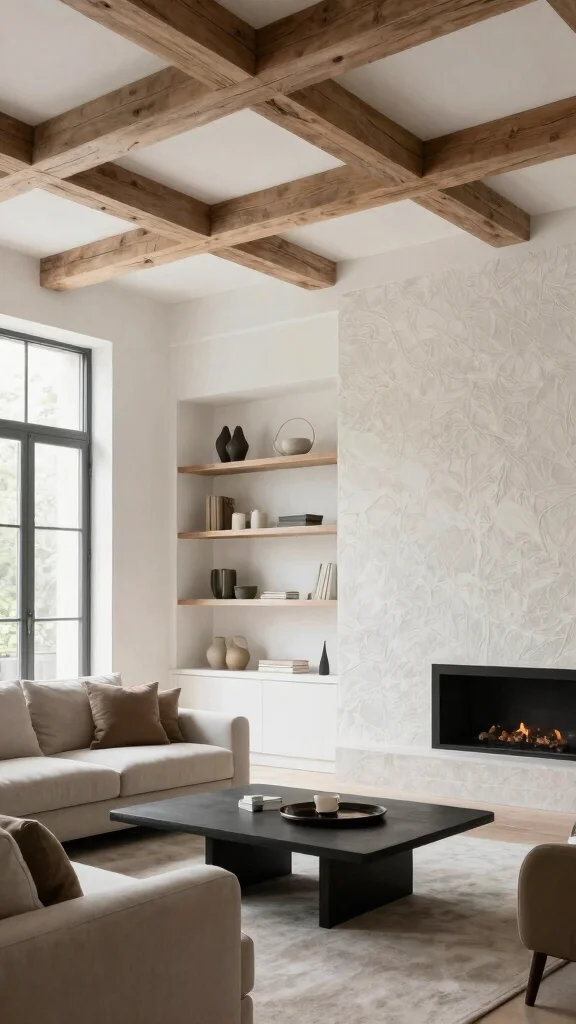
Architectural details can add depth and sophistication to a minimalist living room. Highlighting features like moldings, beams, or built-ins enhances the overall design without requiring additional decor.
If you have unique architectural elements, such as exposed beams or a fireplace, allow them to shine! Paint them in complementary colors or leave them natural for an organic feel. Introduce visual interest with wall treatments like shiplap or textured wallpaper in subtle tones.
Consider open shelving built into the walls to display curated decor while minimizing visual clutter. These details draw the eye and enrich the minimalist theme.
Best practices for highlighting architecture:
– Showcase architectural features as focal points instead of covering them.
– Use contrasting paint colors for trim to define your look.
– Apply wall treatments to introduce texture while preserving simplicity.
Emphasizing architectural details adds character to your living room while adhering to minimalist principles, creating a polished and inviting space.
“Architectural details don’t clutter a space—they define it. In minimalist living rooms, focus on moldings, beams, or built-ins to elevate your living room interior design without adding decor. Paint exposed features in a complementary tone or leave them natural to let them shine.”
12. Mindful Seasonal Decor Updates
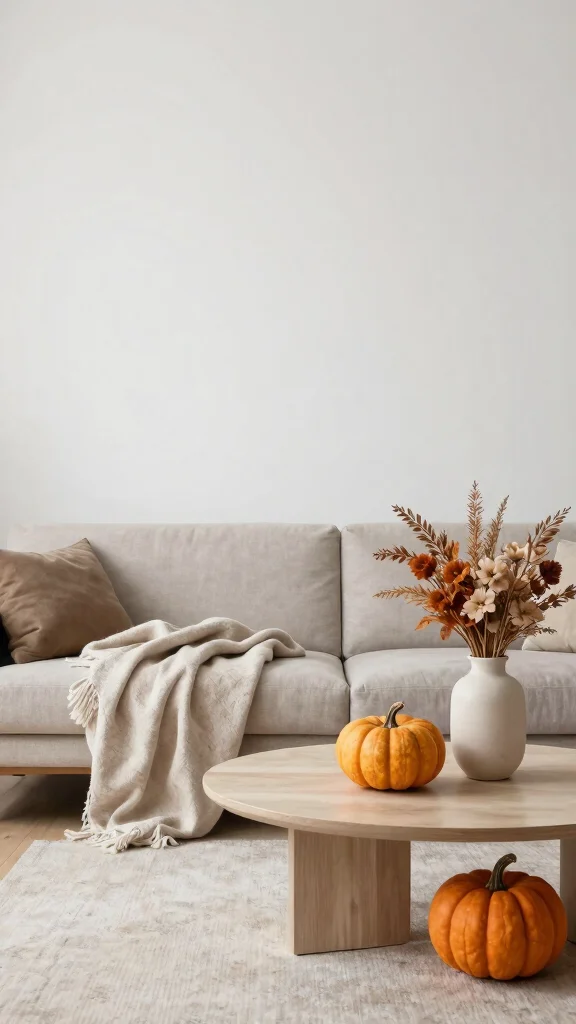
Updating your living room decor with the seasons can keep the space feeling fresh without clutter. The key is to select seasonal elements that align with your minimalist aesthetic.
For example, swapping cushions, throws, or artwork can easily introduce new colors and textures. Choose soft autumn hues, vibrant spring florals, or cool summer tones that reflect seasonal changes. Even small updates can significantly impact your space!
Consider rotating items like candles, decorative objects, or seasonal plants to enhance the seasonal vibe without overwhelming your decor. Remember, tasteful updates are more effective than complete overhauls.
Helpful reminders include:
– Store seasonal items neatly to avoid clutter.
– Choose decor pieces that integrate seamlessly into your existing setup.
– Plan updates to coincide with seasonal activities for a cohesive feel.
By mindfully updating seasonal decor, you maintain your living room’s charm while creating an inviting atmosphere that reflects the changing seasons.
❝ Fun fact: swapping 2 cushions and 1 throw each season keeps your minimalist living room interior design fresh without adding clutter. Even small updates can shift mood and reflect seasonal changes. It’s practical, affordable, and surprisingly powerful.
13. Prioritize Comfort and Function
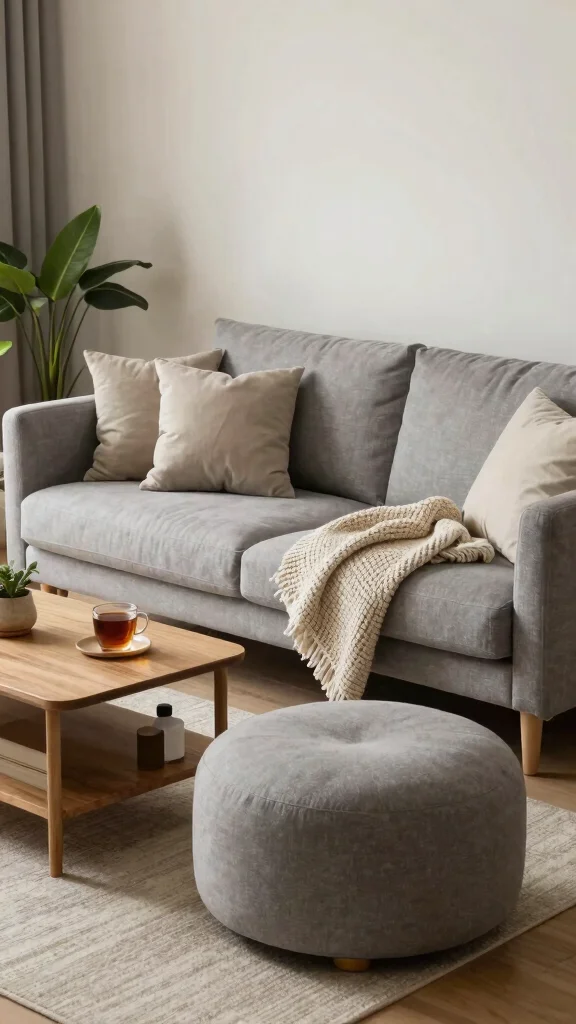
Ultimately, your living room should be a sanctuary of comfort and function. Prioritize pieces that feel good to sit on and enjoy time with loved ones. Minimalism doesn’t mean sacrificing comfort—it’s about being intentional with your choices.
Select a sofa that balances style and comfort, inviting you to lounge or entertain. Enhance it with textured cushions and cozy throws that encourage relaxation.
Choose multifunctional furniture that meets your needs while maintaining a clean look. Pieces like stylish ottomans that double as storage or side tables that offer extra seating enhance functionality.
Key takeaways for comfort:
– Test furniture for comfort before making a decision.
– Create cozy corners with plush seating and soft lighting.
– Regularly assess your space to ensure it supports your comfort and lifestyle needs.
Building a living room that emphasizes comfort and function ensures it’s a space you will love to spend time in, anchoring your minimalist decor in genuine warmth and practicality.
Conclusion
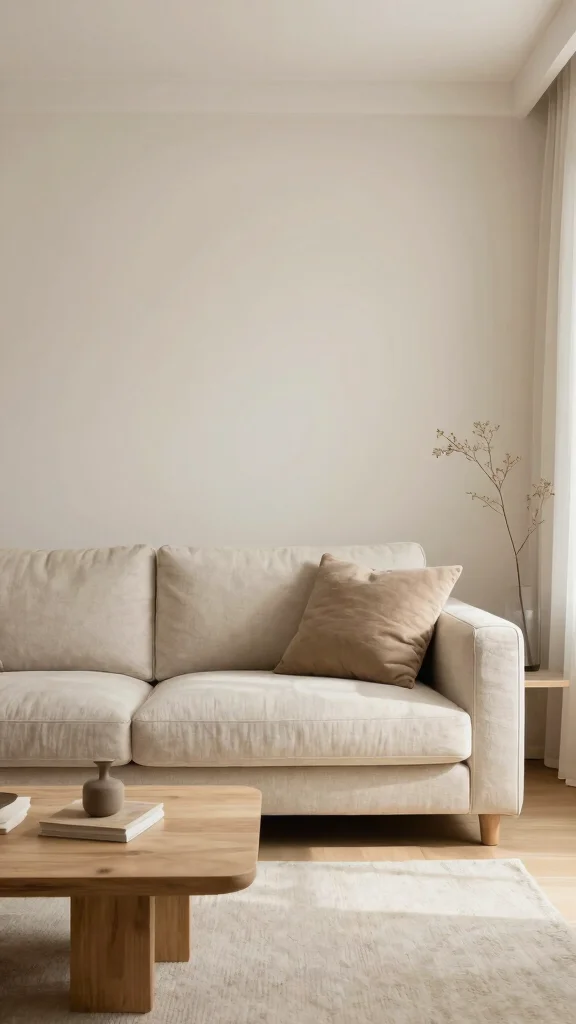
With a few thoughtful adjustments and elevated design choices, your living room can become a refined retreat that reflects both your style and lifestyle. Remember, simplicity is key in minimalist design, allowing each element to shine.
Embrace these 13 ideas to create a polished, comfortable, and welcoming space that you’ll love to share with friends and family or simply enjoy on your own. Dive into your design journey and let your personality shine through in every corner of your living room!
Note: We aim to provide accurate product links, but some may occasionally expire or become unavailable. If this happens, please search directly on Amazon for the product or a suitable alternative.
This post contains Amazon affiliate links, meaning we may earn a small commission if you purchase through our links, at no extra cost to you.
Frequently Asked Questions
What are the key elements of living room interior design for a minimalist space?
In minimalist living room interior design, intent beats excess. Start with decluttering and a neutral color schemes for living rooms that feel calm and cohesive. Choose only essential furniture and ensure each piece serves a purpose using furniture arrangement strategies that create open sightlines and easy traffic flow. Layer texture with one or two cozy living room accessories—like a soft throw or tactile rug—while keeping surfaces clean. Finally, maximize natural light and opt for simple finishes to achieve a polished, inviting space.
What are some modern living room ideas that fit minimalist decor tips?
Think clean lines and restrained palettes. Try modern living room ideas that follow minimalist decor tips by sticking to a tight color palette, two or three essential furniture pieces, and hidden storage to keep surfaces uncluttered. Use natural light, slim-profile furniture, and warm textures to add coziness. Build contrast with a single color schemes for living rooms accent and repeat it across cushions or a planter. All of this aligns with living room interior design principles and yields a timeless, breathable space.
How can I incorporate cozy living room accessories without clutter?
Choose quality over quantity. Start with one or two cozy living room accessories—a plush throw, a textured rug, a soft cushion—and then add a single plant or lamp for a touch of warmth. Layer textures from natural fibers, but store extras in hidden storage to keep surfaces calm. Use color schemes for living rooms and lighting to create warmth, not clutter. With a mindful mix, your space will feel inviting yet minimalist.
What color schemes for living rooms work best with a minimalist approach?
Start with a neutral canvas—beige, gray, or off-white—as a foundation for living room interior design. Then add depth with a restrained accent color in color schemes for living rooms, such as navy, taupe, or sage, repeated across accessories. Keep contrast subtle and rely on light to keep the space airy. Choose fabrics and finishes that reflect a calm, cohesive aesthetic, turning the design into a quiet, polished environment.
How can I optimize furniture arrangement strategies to make a small living room feel bigger?
Define a clear focal point and center seating around it. Use furniture arrangement strategies like angling a sofa, placing a compact coffee table, and selecting a slim media console. Prioritize traffic paths and avoid oversized pieces that crowd the room. Choose multipurpose furnishings (ottomans with storage, nesting tables) to save space, and finish with a light rug to visually enlarge the area. The result is a functional, breathable living room interior design.
Related Topics
home decor
minimalist design
living room interior design
modern living room ideas
cozy accessories
color schemes
furniture arrangement
easy decor tips
beginner friendly
stylish simplicity
updated spaces
minimalist decor